
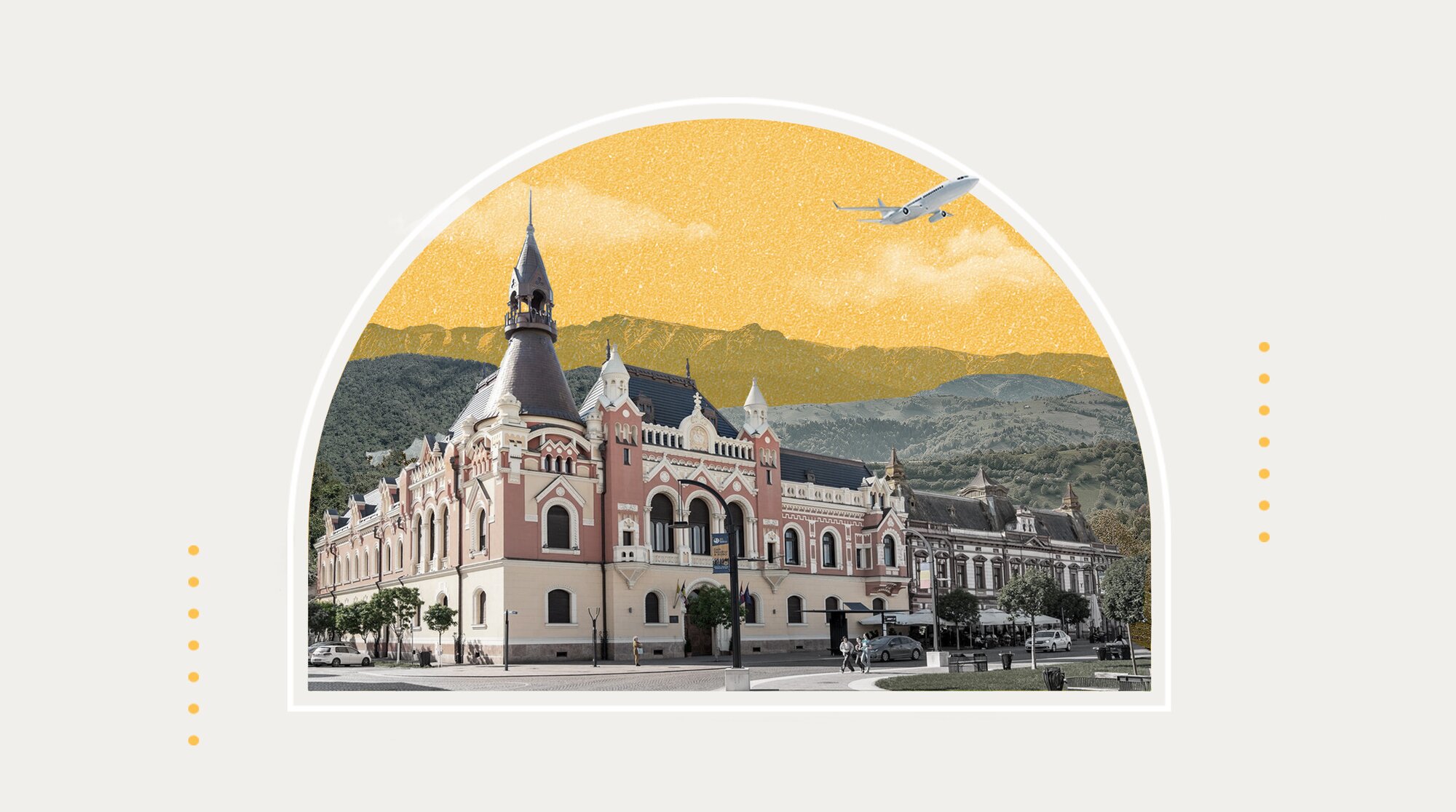
In the last couple of years, Romania has been quietly emerging as a top European travel destination.
And you don't have to look hard to see why.
Romania's UNESCO World Heritage sites, wildly beautiful Carpathian Mountains, colourful villages, lavish architecture and intriguing cities cover all bases.
And as a developing destination, Romania also lacks the crowds and higher prices of more-established holiday hotspots.
33 Interesting Facts About Romania
The Romanian Flag / Unsplash / aboodi vesakaran
Considering a trip to see what the fuss is all about?
These interesting facts about Romania will give you a taste of its quirks, history and natural wonders.
I'll also share some practical tips that have helped me on my own trips to this amazing country.
These include how to stay connected with a Romania eSIM so you can navigate its winding roads, find the best castles and share your adventures without problem phone bills greeting you when you get home.
1. Bucharest Has the World's Heaviest Building
Bucharest's Palace of the Parliament is the second-largest administrative building in the world after the Pentagon.
It's also the world's heaviest building, weighing in at around 4.1 million tonnes. In fact, it's so heavy that it sinks slightly each year into Bucharest's soft soil.
Hitting another record, it's also the canvas for the iMapp, the largest video mapping event in the world.
Basically, this building is a heavyweight in every respect and certainly worth visiting on any trip to Bucharest.
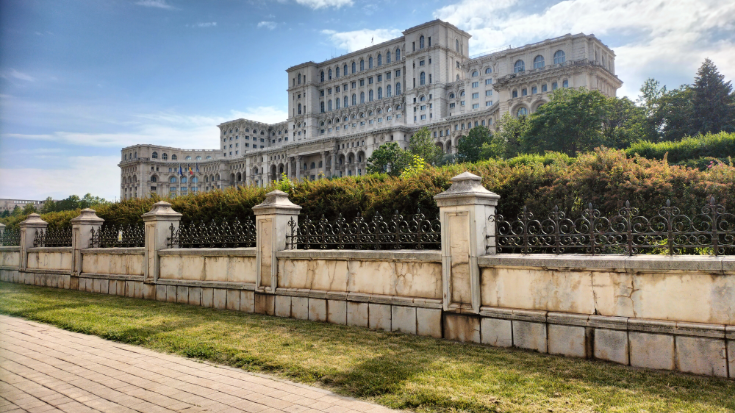
Palace of the Parliament, Bucharest / Image owned by author
2. Romania is the Home of Dracula's Castle - Sort Of
Bran Castle is famously linked to Bram Stoker's Dracula. But here's the twist - there's no real connection at all.
The author never visited Romania. He just picked a picture of a Romanian castle from a book and used it to spin his timeless, world-famous vampire novel.
Despite this weak link, the castle is still a major tourist draw. Visitors commonly make the day trip to Bran Castle from Bucharest, stopping at Brașov and Peleș Castle on the way.
3. You Can Visit an Underground Theme Park
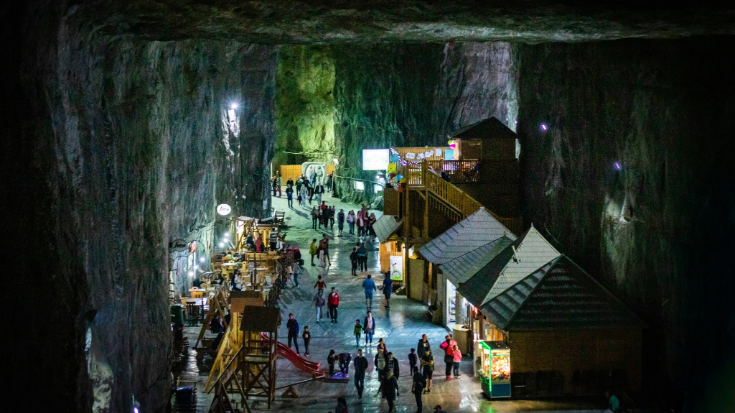
The theme park underground in Salina Turda Salt Mine / Unsplash / Adrian Moise
Salina Turda is a former salt mine turned tourist attraction 120 metres below the ground.
It's home to a subterranean theme park, including a ferris wheel, mini golf, bowling, billiards and table tennis.
The complex also has an underground lake where you can row boats in a truly unique setting.
4. Romania Has Europe's Largest Brown Bear Population Outside of Russia
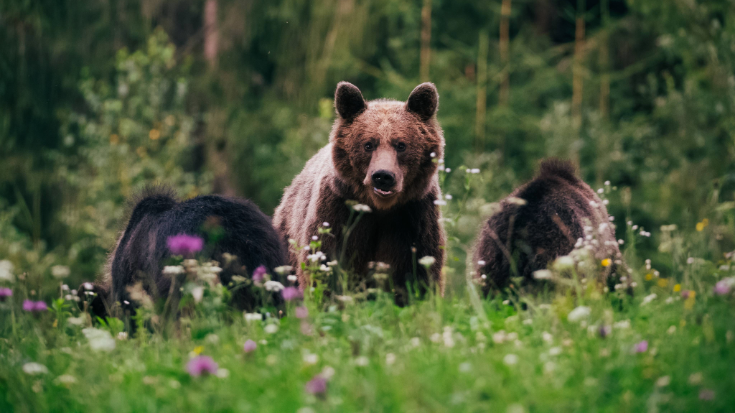
Romanian brown bears in the wild / Adobe Free Stock / belyaaa
The Carpathian Mountains are home to thousands of brown bears.
Recent surveys suggest over 10,000, making Romania the top bear country in Europe outside of Russia.
In recent years, some bears have wandered closer to villages as people leave food behind or feed them.
So visitors are encouraged to admire these animals responsibly from a safe distance.
5. A Merry Cemetery Celebrates Life over Darkness
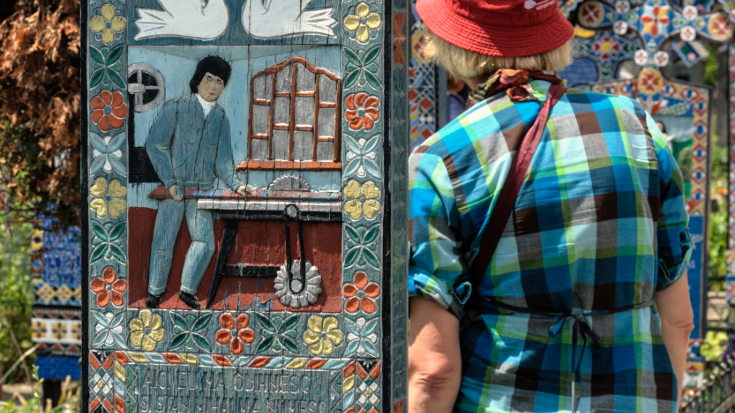
A tombstone at the Merry Cemetery / Wikimedia Commons / RolandvonG
In Săpânța, a town in the north of Romania, sits a cemetery with a difference.
Dubbed the Merry Cemetery, it's home to quirky monuments, brightly painted wooden crosses, and funny poems paying tribute to those interred there.
Instead of gloomy granite headstones, you'll find colourful memorials that focus on appreciation rather than mourning.
It's testimony to Romanian people finding joy in the most unlikely of places.
6. The Language Is Latin-Based
Romanian is a Romance language. Unlike most of its Slavic neighbours, it's related to Italian, Spanish, French and Portuguese.
This means if you know any Romance language, there's a chance you might understand bits of Romanian.
7. Romania Has One of Europe's Best Medieval Towns
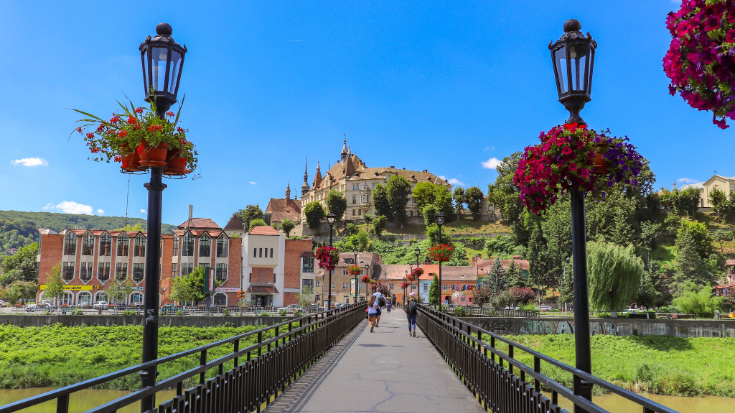
One of the scenic paths leading to colourful Sighișoara / Adobe Free Stock / Ioan
Sighișoara isn't just easy on the eyes with its pastel streets and storybook towers.
It's also a UNESCO World Heritage Site and the birthplace of Vlad the Impaler, the ruler who inspired Dracula.
Wander its cobbled lanes and you'll feel like you've stepped straight into the pages of a medieval legend.
8. The Danube Delta Is a UNESCO Reserve
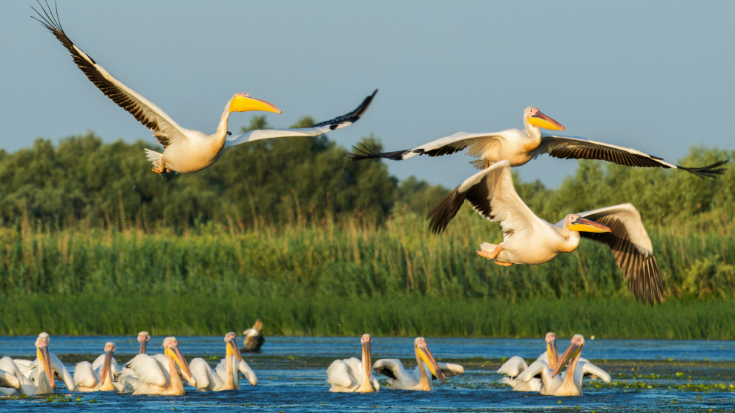
Birds in their natural habitat in the Danube Delta, Romania / Unsplash / Marian Strinoiu
Europe's second-largest river delta, the Danube Delta, is a birdwatcher's paradise.
It's home to over 300 bird species, including pelicans, herons, and many rare or lesser-known species.
9. Romania Has the World's Tallest Wooden Church
Dating back to 1391, the original Peri Monastery played a pivotal role in medieval Maramureș.
Though it was destroyed centuries ago, a new version was built between 1997 and 2003 in the same spirit. And today’s soaring 78-metre wooden church honours its legacy.
10. The Transfăgărășan Road - The Wildest Ride in the World?
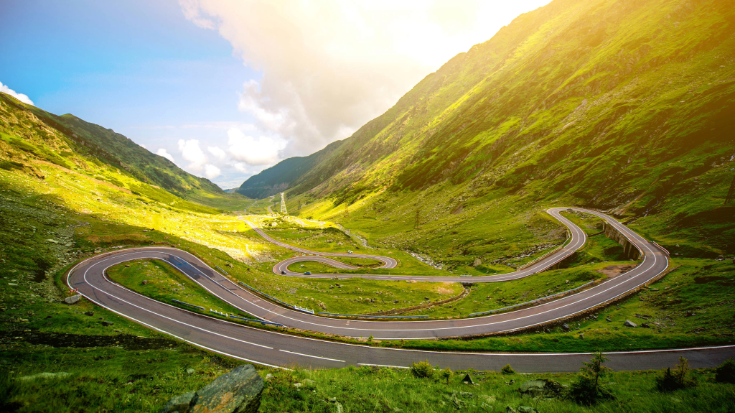
The hairpin twists and turns along Romania's Transfăgărășan Highway / Adobe Free Stock / rh2010
The Transfăgărășan is no ordinary road. It's a rollercoaster of hairpin turns winding through the Carpathian Mountains.
With craggy peaks, deep valleys and glacial lakes around every corner, the drive feels like pure theatre and is often hailed as one of the most spectacular roads on the planet.
11. Romania Has Over 1,500 Fortified Churches
Romania is famous for its fortified churches, especially in Transylvania, where around 150 still stand today.
Built in the Middle Ages by Saxon settlers, they doubled up as houses of worship and community fortresses.
Entire villages could take shelter within their walls during times of attack, leaving behind a striking blend of faith and defence you can still see today.
12. You Can Ride a Steam Train Through Mountains
In Maramureș, you can hop aboard the Mocănița, a narrow-gauge steam train that chugs through valleys, forests and mountains.
Pulled by real steam engines and vintage carriages, it's a slice of old-school slow travel where the scenery takes centre stage.
Just don't forget your phone, complete with eSIM - Romania's rural views are worth catching on camera. Snap photos and share your adventure online as it unfolds.
13. The World's Narrowest Street Is in Brașov
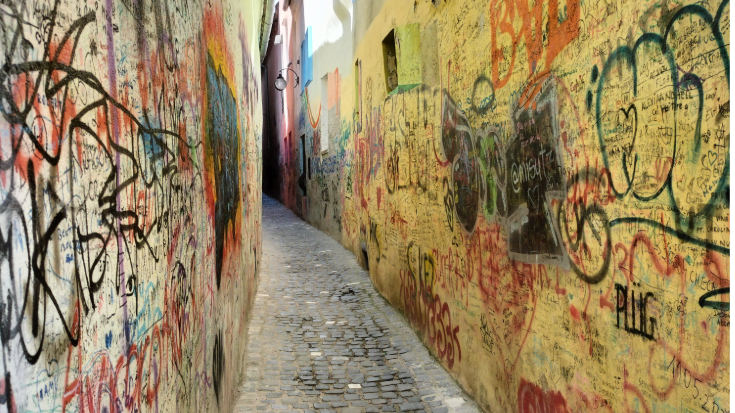
Strada Sforii, one of the narrowest streets in Europe / Image owned by author
Brașov, one of Romania's most popular tourist cities, is home to Strada Sforii.
At just 111 centimetres at its slimmest point, it's believed to be one of the narrowest streets in Europe.
Originally built as a corridor for firefighters, this super-slim passage is now a popular photo spot.
Its fame has induced visitors to leave their mark on it - you'll find it covered in all kinds of notes, declarations and graffiti.
14. Bucharest Has a Triumphal Arch
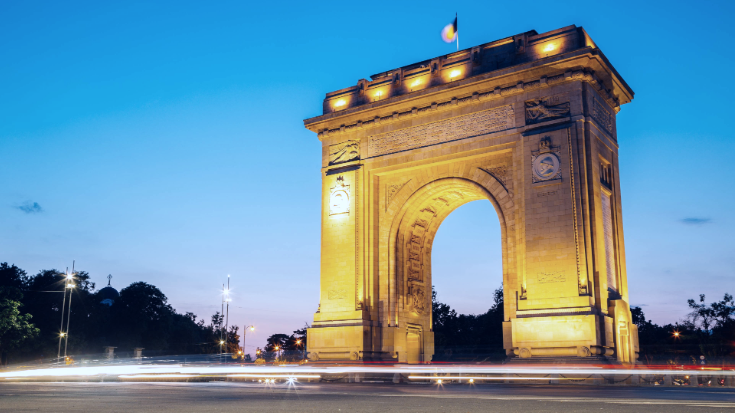
Bucharest's Arcul de Triumf by night / Adobe Free Stock / Sanga
Modelled after Paris's Arc de Triomphe, the Arcul de Triumf celebrates Romania's role in WWI and independence.
It might lack the French original's tourist crowds, but Bucharest's version gives similar grandeur.
The arch sits on the outskirts of King Michael I Park - a beautiful green space with curated gardens, sculptures and a boating lake.
15. Romania Invented the Modern Fountain Pen
While Hungary gets credit for the biro, kudos for inventing the fountain pen belongs to Romanian Petrache Poenaru.
He patented his design in 1827, which included a portable ink system that didn't need constant dipping.
Quite fitting that a country known for fantastic literature gave the world a more convenient way to write.
16. Romania Has Black Sea Beaches
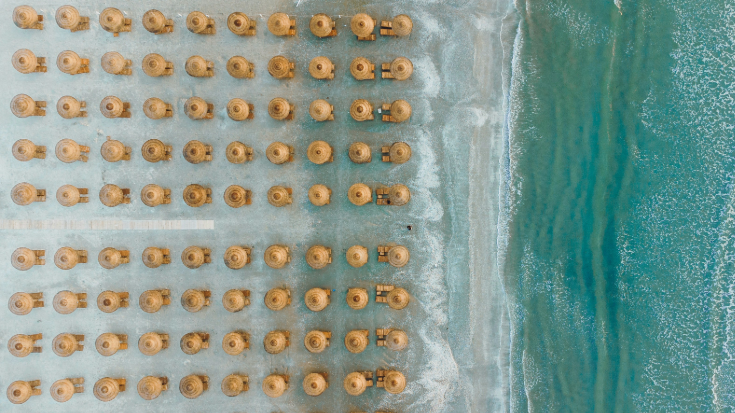
A drone shot of Mamaia, the Black Sea, Romania / Unsplash / Alex Sanislav
Mamaia is Romania's top seaside resort. It boasts sandy shores, summer festivals and nightlife rivalling Mediterranean spots at half the cost.
The resort stretches between the Black Sea and Lake Siutghiol - spots also worth a visit in Romania's warm summer months.
17. Romania's Painted Monasteries Are Masterpieces
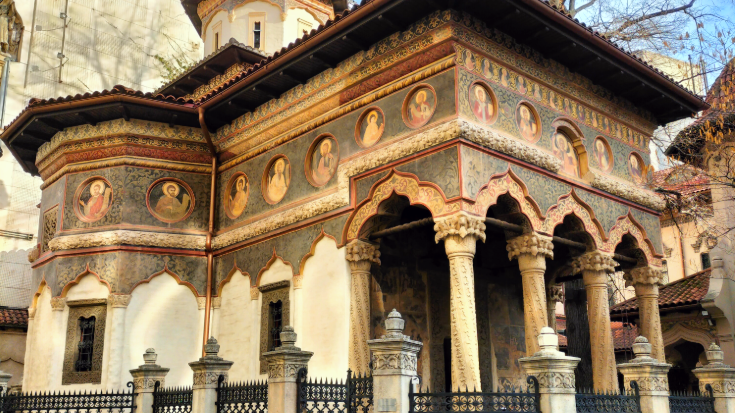
An example of Romania's decorative religious buildings, the Church of the Stavropoleos Monastery, Bucharest - Image owned by author
In Bucovina, Orthodox monasteries are covered inside and out with vivid 15th and 16th-century paintings.
These outdoor art galleries have survived centuries of weather, war and politics while keeping their brilliant colours.
18. Romanian Food Is Comfort Heaven
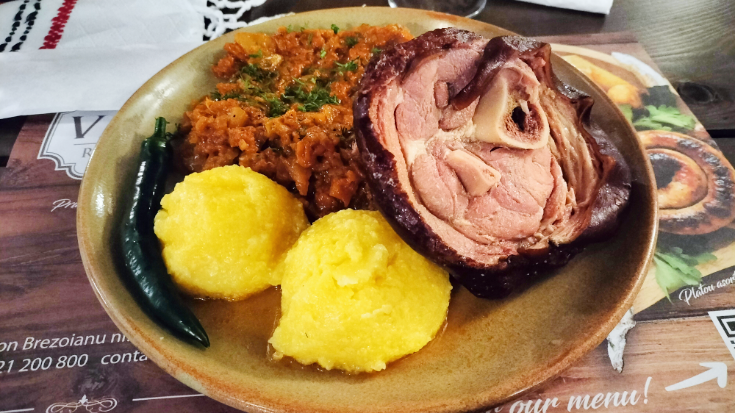
Braised cabbage stew with smoked ham-hock, polenta and chilli / Image owned by author
Traditional Romanian dishes like sarmale (mince-stuffed cabbage rolls), mămăligă (polenta) and hearty soups are comfort food at its finest.
Romanian cuisine mixes Turkish, Hungarian, German and Balkan influences. And the flavours will satisfy both your stomach and your soul.
It's food that helps you understand Romanian hospitality. When food revolves around sharing big warming meals, welcoming strangers becomes natural.
19. Bucharest Has One of Europe's Most Popular Spas
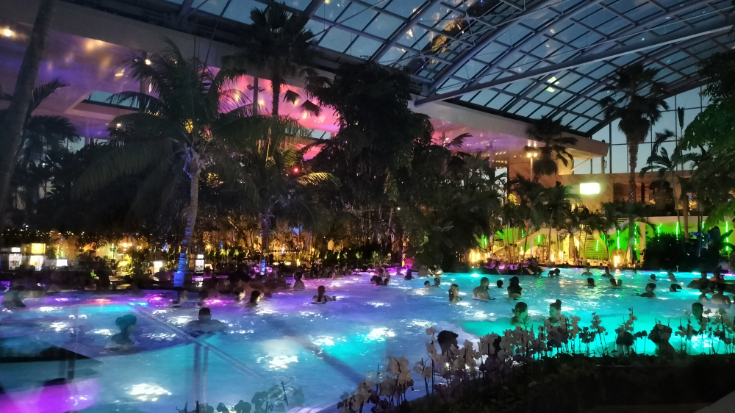
The main pool at Therme Bucharest after sunset / Image owned by author
Therme Bucharest is a colossal spa that sits on the city's outskirts, close to the airport.
As Europe's second-biggest spa and a major social media highlight, it attracts over 8,000 visitors a day and has capacity to welcome 24,000 at any one time.
The huge complex features thermal pools, ten different types of sauna, restaurants and adrenaline-firing water slides under one giant roof.
20. Romania Has One of Europe's Most Beautiful Waterfalls
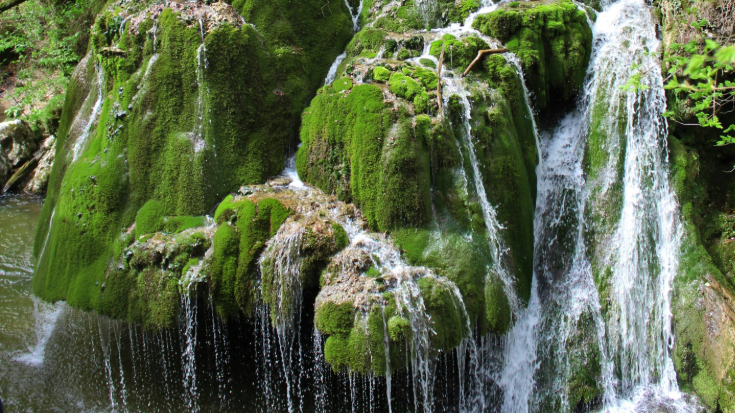
Romania's moss-covered Bigăr Waterfall / Unsplash / Romina Kola
The Bigăr Waterfall in Romania's Caraș-Severin County is often called one of the most unique waterfalls in the world.
Water flows over a green, moss-covered cliff in delicate streams, creating a fairytale-like curtain of water.
It's tucked away in the Cheile Nerei-Beușnița National Park and draws visitors from around the globe.
21. Romanian People Are Renowned for Being Welcoming
Romanian hospitality is legendary.
If you're visiting friends or family, expect to be greeted with food and drink, including home-made palincă and fresh bread, within minutes of arrival.
This isn't obligatory politeness; it's genuine warmth rooted in culture and tradition.
22. The Carpathian Mountains Are a Hiker's Dream
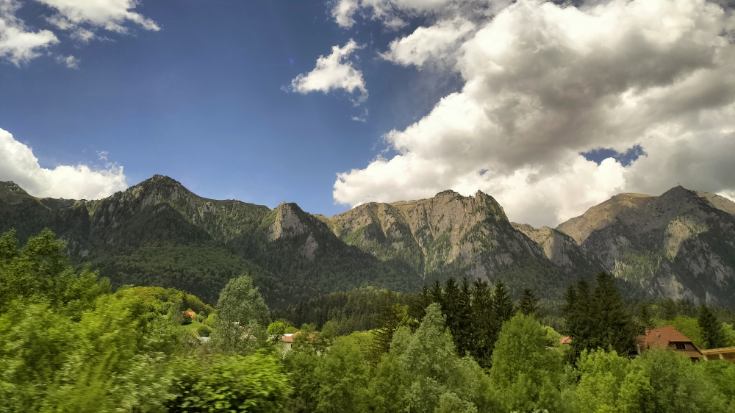
Romania's Carpathian mountain range on a clear May morning / Image owned by author
Dramatic peaks, wildflower meadows, and remote shepherd huts. Romania's Carpathian Mountains offer everything from gentle valley walks to challenging summit attempts.
They're also part of Europe's great rewilding story, with European bison successfully reintroduced after becoming extinct in the wild.
Unlike crowded Alpine routes, Romania's trails provide real solitude and wilderness.
23. Romania Has Europe's Largest Gold Deposit
Deep in the Apuseni Mountains lies Roșia Montană, home to Europe's largest known gold reserves.
Mining here began under the Romans, who carved kilometres of underground galleries that can still be explored today.
For over 2,000 years, the area was worked almost continuously, making it one of the world's oldest industrial mining sites.
Today, Roșia Montană is protected as a UNESCO World Heritage Site, recognised both for its immense archaeological value and its glittering place in European history.
24. You Can See Wild Horses in the Danube Delta
The Letea Forest hosts one of Europe's last wild horse populations. Descendants of domestic horses that adapted to wetland life over centuries.
These hardy animals roam freely through unique ecosystems, forest, marsh and grassland combined. Spotting them needs patience and local knowledge, but witnessing wild horses provides an unforgettable experience.
25. Bucharest Was Once Nicknamed 'Little Paris'
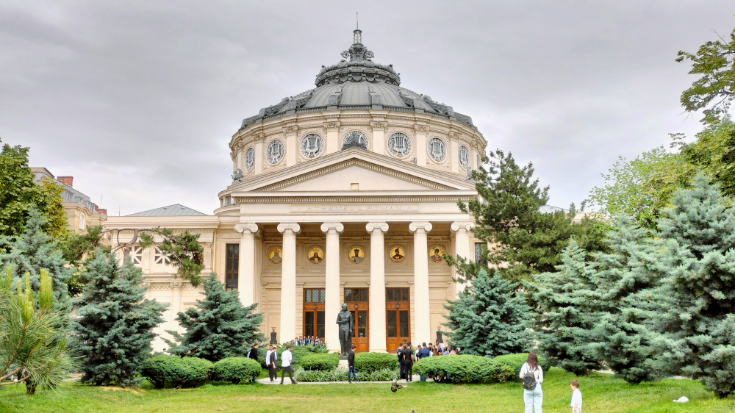
The Romanian Athenaeum on Calea Victoriei, Bucharest / Image owned by author
Before WWII, Bucharest's elegant Belle Époque architecture, wide boulevards and sophisticated café culture earned it the nickname 'Little Paris'.
Many buildings still feature Parisian-style rooftops, wrought-iron balconies and grand facades.
The maximalist Little Paris Museum is a must-see attraction that harks back to this golden age.
26. Romania Produces Some of Europe's Best Wine
Romania is one of the world's oldest wine-producing regions and has been making wine for over 6,000 years.
The country ranks 13th globally for wine production, with a climate and soil perfect for both red and white varieties.
Wine tours in regions like Dealu Mare offer tastings at bargain prices compared to France or Italy.
27. Romania Has the World's Most Beautiful Bookstore
In the heart of Bucharest, Cărturești Carusel turns a 19th-century building into a multi-level book lover's paradise.
Its spiral balconies, white columns, and flowing design make the space feel like a modern-day temple to literature.
With thousands of books, cosy reading nooks, and a chic café tucked inside, even non-readers can't help but linger.
28. Brașov's Black Church Has One of the Largest Organs in Eastern Europe
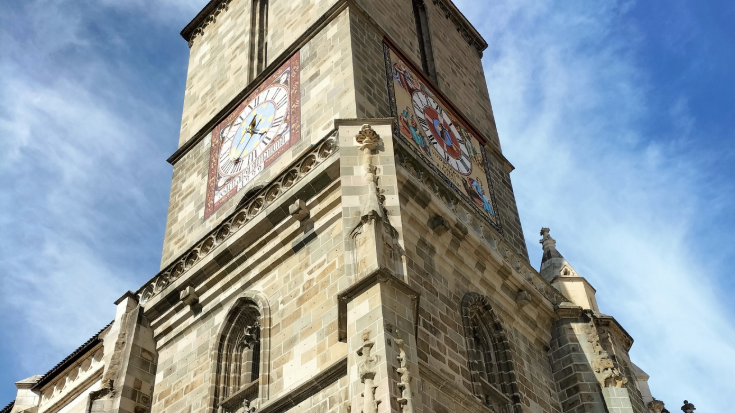
The exterior of Brașov's Black Church / Image owned by author
The Black Church in Brașov was built in the 14th century and is home to a magnificent organ featuring 4,000 pipes.
Regular concerts showcase the instrument's incredible range and the church's exceptional acoustics.
The building got its name after fire damage blackened its walls. Restoration has returned much of its original appearance while keeping the mysterious nickname.
29. The Currency Is the Leu
Like Albania's lek, Romania's leu, plural: lei, can be tricky to find outside the country.
You can buy Leu in the UK and Ireland by pre-ordering it in advance. Or you can exchange your money after arriving in Romania.
Cards are accepted widely in most major cities, but many shops in rural regions still prefer cash.
It's always worth carrying some lei for authentic experiences off the beaten path.
30. Romania Has Natural Thermal Springs
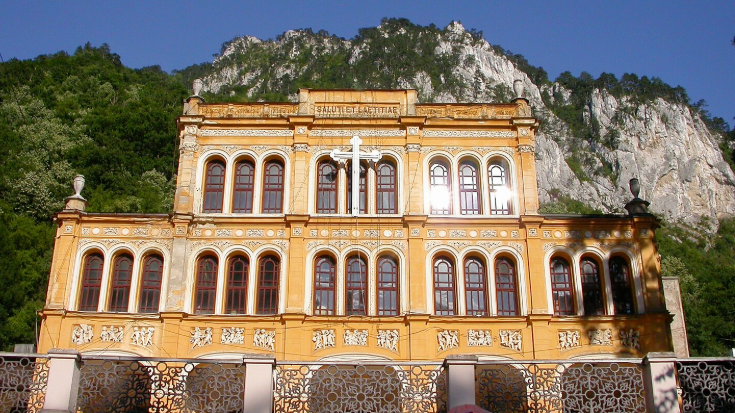
The Casino Ensemble in Băile Herculane, once the glittering heart of an imperial spa resort, now awaiting restoration / Wikimedia Commons / Andrei Kokelburg
Băile Herculane has drawn visitors since Roman times, later flourishing as a grand Austro-Hungarian spa resort.
Today, the springs still flow, with modern spas alongside faded imperial bathhouses.
Its mix of wellness, history and atmospheric decay makes it one of Romania's most intriguing spa towns.
31. There's an Entire Village Dedicated to Pottery
Horezu in southwest Romania is renowned for distinctive handcrafted ceramics, featuring traditional patterns and techniques passed down through generations.
The village's pottery tradition earned UNESCO recognition for its cultural significance and artistic excellence.
32. The Iron Gates Are a Natural Wonder
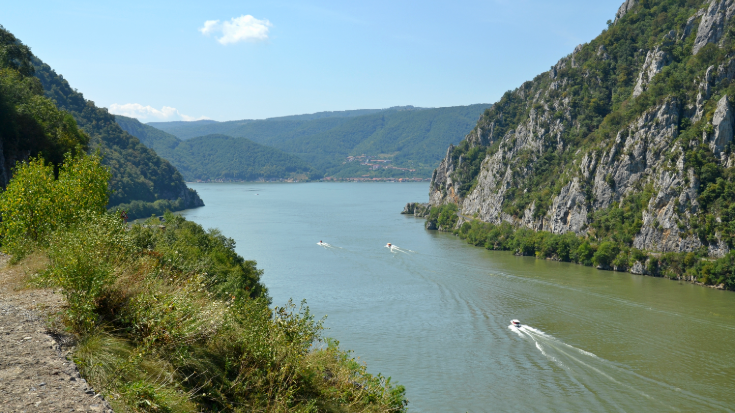
A view of the gorge known as the Iron Gates / Wikimedia Commons / Pudelek
The Iron Gates is a dramatic gorge system on the Danube River, forming part of the natural border between Romania and Serbia.
Stretching for more than 130 kilometres, it's one of the largest river gorges in Europe.
The river squeezes through towering limestone cliffs, especially at the Great Kazan Gorge, creating a passage that has challenged navigation for thousands of years.
You'll also spot the Lord of the Rings-esque 40-metre-high rock sculpture of King Decebalus, now one of Romania's most iconic landmarks.
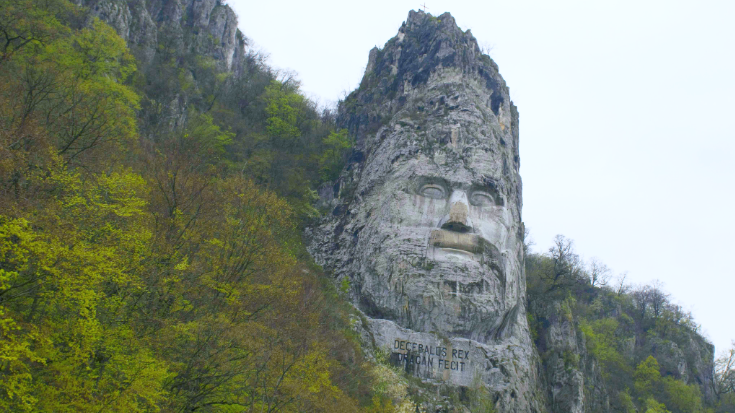
The colossal sculpture of King Decebalus' head carved into rock / Unsplash / Albert Teodorescu
33. An eSIM for Romania Will Save You a Lot of Hassle
The Roam Like at Home rule no longer applies since the UK's exit from the EU.
For UK travellers heading to Romania on holiday, this means that your mobile provider may charge you for roaming services in the country.
Downloading a Romania eSIM from Airalo before you go can help you avoid daily fees or buying separate roaming passes.
Head to the Airalo store, decide how much data you need and for how long, then download and activate for an instant connection the moment you land.
Perfect for avoiding bill shock while navigating mountain passes, booking castle tours or finding the best restaurants in Bucharest.
FAQs - 33 Fun Facts About Romania
1. What Is Romania Famous For?
Romania is famous for medieval castles, the dramatic Carpathian Mountains, Europe's largest brown bear population, and the unique Danube Delta. The country also has impressive buildings like the world's heaviest structure and beautiful painted monasteries.
2. Is Romania Cheap For Tourists?
Yes, Romania offers exceptional value for tourists compared to parts of Western Europe. Accommodation, dining, transport and attractions cost much less than similar experiences. Perfect for budget-conscious travellers who don't want to compromise on quality.
3. What Are Some Cool Facts About Romania?
Romania has an underground theme park in a former salt mine, one of Europe's narrowest streets and the world's tallest wooden church. It also has a 'Merry Cemetery' with colourful tombs and fun epitaphs and a dramatically snaking highway that many consider to be the most exciting road in the world.
4. Can I Use an eSIM in Romania?
Yes, a Romania eSIM provides convenient connectivity without physical SIM cards or surprise roaming charges. Particularly useful for navigating rural areas and staying connected during outdoor adventures.






_in_2016_-_01.jpg)