
Some of the world's most turbulent flight routes are also the most breathtaking. Flying these routes can be a shaky experience, even on clear days.
But turbulence is a common part of flying, with aircraft designed to withstand it and flight crews trained to handle it.
In this blog post, we'll look at the world's most turbulent flight routes and what makes them so lively. And why there's no reason to worry the next time the seatbelt sign comes on.
Stay connected wherever you fly: Whether you’re crossing continents or hopping between cities, a travel eSIM keeps you online from the moment you land. Check out your options here.
What Causes Turbulence?

Airplanes and in-flight procedures, such as staying seated and fastened in, are designed to safely ride out patches of turbulence / iStock / Urbazon
Turbulence happens when smooth airflow gets disrupted. You could compare it to water flowing smoothly down a stream, then hitting rocks and creating rapids.
Our atmosphere works similarly. When air masses of different temperatures, speeds or directions collide, things get choppy.
But the good news is, pilots can anticipate most kinds of turbulence using weather radar, flight forecasts, and reports from other aircraft.
Why Some Routes Are Bumpier Than Others
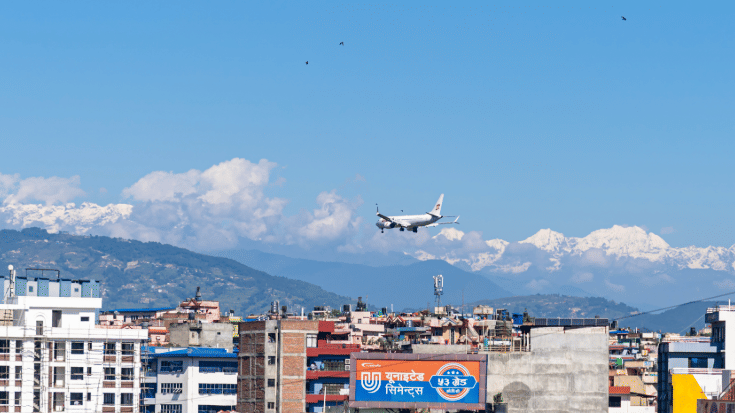
An airplane approaching Kathmandu, Nepal; an area known for bumpy skies, but one that skilled pilots handle every day / iStock / AP Tolang
Three main factors determine whether your flight will be smooth sailing or a little rockier than expected.
1. Jet Streams and Seasonal Winds
High above the Earth, narrow rivers of air, or jet streams, move at speeds of over 200 mph. Pilots often use them to save time and fuel, like catching a fast-moving current.
But when an aircraft enters or leaves these wind corridors, the sharp changes in speed and direction can make the ride a little uneven. Flying with a jet stream can feel bumpy, but it's efficient. And moving against it is like swimming upstream through choppy water.
2. Mountains and Coastal Terrain
When strong winds hit mountains or cliffs, the air has nowhere to go but up. It then spills and tumbles down the other side, creating mountain waves that can ripple for miles, even over flat terrain beyond the peaks.
The taller and steeper the range, the more pronounced the effect. That's why the Alps, Andes, Rockies, and Himalayas are known for their lively skies.
3. Weather Fronts and Air Mass Boundaries
Turbulence often forms where different air masses collide. For instance, where warm, humid air meets a cold front. These boundaries can appear suddenly, turning a calm stretch of air into a brief patch of bumps, then back to smooth again just as quickly.
It's one reason the ride can change so noticeably within minutes on a long flight.
The World's Most Turbulent Flight Routes (And Why You Shouldn't Worry About Them)
The world's choppiest journeys tend to be short-haul flight routes that cross mountains or coastlines, where fast-moving air meets uneven terrain.
Whether you're a nervous flier or simply curious, data from Turbli, a turbulence forecast tool, reveals which routes worldwide are statistically the bumpiest.
South America: Flight Routes Over the Andes
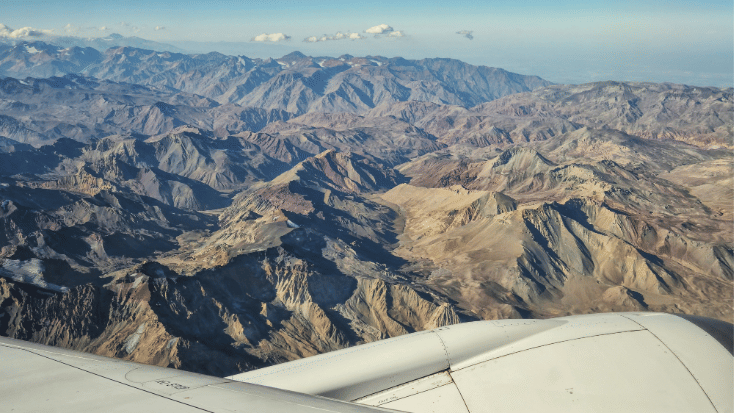
The views flying from Santiago, Chile, over the Andean Cordillera / Unsplash / JP Desvigne
Turbli's top four routes with the highest average turbulence worldwide are in Chile and Argentina, particularly around the Santiago and Mendoza regions. These cities sit on opposite sides of the Andes Mountains, one of the world's longest and highest ranges.
Acting as a natural barrier, the Andes force strong westerly winds up and over the peaks; a recipe for mountain-wave turbulence.
- Mendoza (MDZ)–Santiago (SCL)
- San Carlos de Bariloche (BRC)–Santiago (SCL)
- Mendoza (MDZ)–Salta (SLA)
- Mendoza (MDZ)–San Carlos de Bariloche (BRC)
Mendoza to Santiago or Bariloche to Santiago often record higher turbulence levels than almost anywhere else in the world. It's perfectly normal for the area, and crews flying these routes are thoroughly familiar with the conditions.
Asia: Flight Routes Into Lhasa
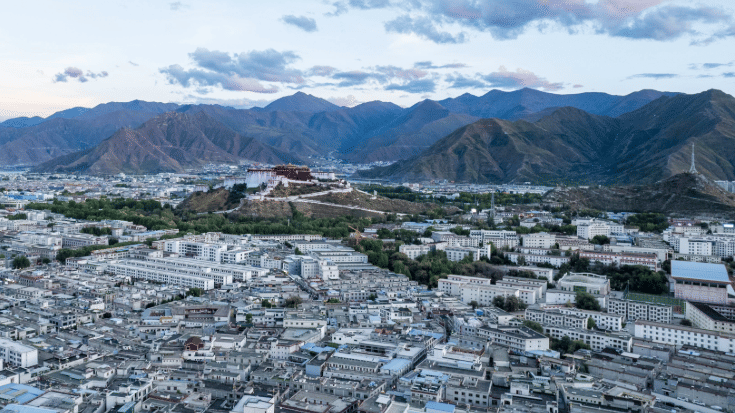
Approaching Lhasa, one of the world's highest airports, surrounded by mountains that create shifting winds and lively air currents on approach / Unsplash / ダモ リ
According to Turbli's turbulence index, several flight routes into Lhasa rank among the world's bumpiest. The Tibetan Plateau's high altitude, thin air, and shifting mountain winds combine to create lively flying conditions that demand expert precision from pilots.
- Kathmandu (KTM)–Lhasa (LXA)
- Chengdu (CTU)–Lhasa (LXA)
- Guiyang (KWE)–Lhasa (LXA)
- Kunming (KMG)–Lhasa (LXA)
- Chongqing (CKG)–Lhasa (LXA)
The first two routes appear in Turbli's global top ten, while the others are included in Asian routes with the highest average turbulence. This reflects the challenges of navigating some of the highest airspace on Earth.
Other regional routes, such as Chengdu–Xining, show similar turbulence patterns as aircraft transition between the plateau's peaks and basins.
Europe: Flight Routes Over the Alps
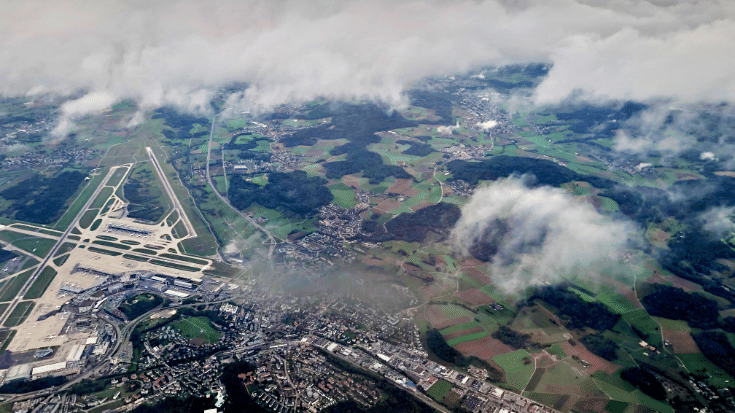
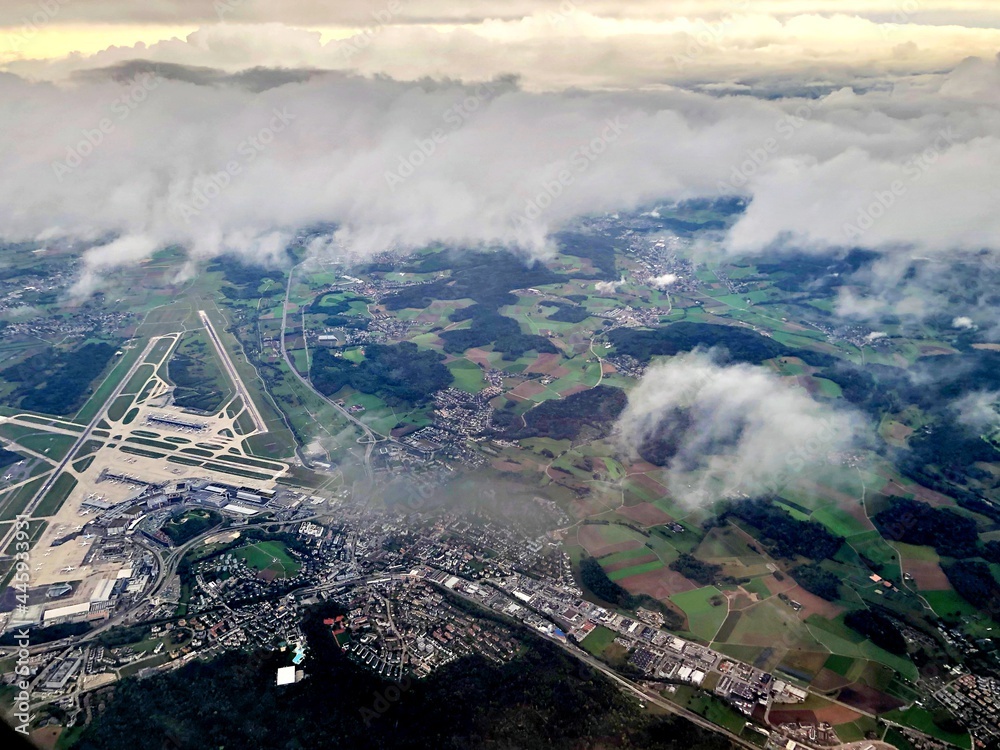
Approaching Zurich can feel a little lively, as mountain winds near the Alps sometimes stir the air / Adobe Free Stock / Peter
In Europe, the most turbulent flight routes are those that cross the Alps, particularly into Switzerland. Turbli's data shows several Zurich approaches in the continent's top ten:
- Nice (NCE)–Zurich (ZRH)
- Milan (MXP)–Zurich (ZRH)
- Geneva (GVA)–Zurich (ZRH)
- Lyon (LYS)–Zurich (ZRH)
- Venice (VCE)–Zurich (ZRH)
Mountain winds can disturb the air, especially when the Foehn winds sweep across the Alps, but pilots are masters of this terrain. They'll often adjust altitude or approach paths to find calmer layers of air.
This usually leaves passengers with a few gentle ripples and a spectacular view of Switzerland on descent.
North America: Flight Routes Over the Rockies
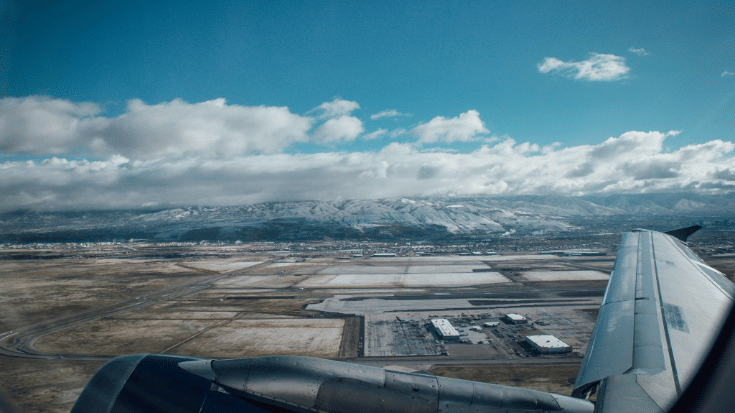
A plane taking off from Denver, where mountain winds and altitude can add a few gentle bumps on takeoff / Unsplash / Christopher Ott
In North America, some of the bumpiest flight routes are those that cross the Rocky Mountains, where high-altitude winds meet dramatic terrain.
- Albuquerque (ABQ)–Denver (DEN)
- Denver (DEN)–Jackson (JAC)
- Jackson (JAC)–Salt Lake City (SLC)
The jet stream often dips close to the Rockies, creating invisible ripples of air that can make these routes feel a little more animated than most. Rapid changes in altitude and temperature add to the mix.
But this is well-charted territory for North American pilots, who expertly handle these routes daily.
Oceania: Flight Routes Across the Tasman and Cook Strait

The approach to Wellington International Airport, one of the hubs named in Turbli's most turbulent flight routes data / Unsplash / Walter Walraven
Oceania's bumpiest flight routes are clustered around New Zealand and Australia's southeast coast.
- Christchurch (CHC)–Wellington (WLG)
- Brisbane (BNE)–Sydney (SYD)
- Hobart (HBA)–Melbourne (MEL)
The Cook Strait and Tasman Sea coastline are natural wind tunnels, funnelling powerful gusts between mountains and ocean. These conditions can make short-haul flight routes a little lively on approach, especially when southerly winds pick up.
But the upside is that the views over the strait, coastline and harbour landings are some of the most spectacular in the world. And local pilots are well accustomed to managing the region's winds.
Africa: Flight Routes Over Southern Highlands
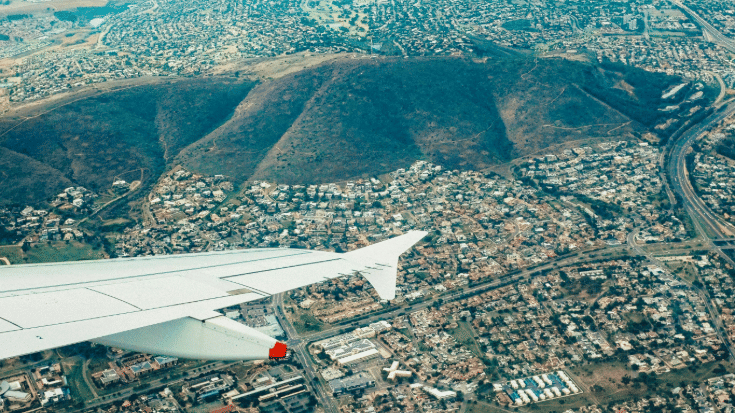
Flying into Cape Town, where coastal winds meet rising inland air; a common recipe for light turbulence / Unsplash / Ashim D’Silva
Across Africa, the flight routes most likely to record turbulence are those connecting South Africa’s coastal and inland cities. Here, big shifts in temperature and elevation shape the air currents.
Turbli's data shows the flight routes most likely to record turbulence include several of South Africa's busiest short-haul connections:
- Durban (DUR)–Johannesburg (JNB)
- Cape Town (CPT)–Durban (DUR)
- Addis Ababa (ADD)–Antananarivo (TNR)
Onshore winds from the Indian Ocean, combined with warm rising air over the Highveld plateau, can create a few light bumps on these short-haul journeys. It's a familiar pattern for regional crews. Most passengers experience it as a brief wobble before the view opens up to South Africa's dramatic landscapes.
Should I Be Worried About Turbulence?
Turbulence can be frightening because it's unpredictable and out of our control. But when it next hits, you can bear these points in mind to ride out those moments of doubt.
- Turbulence is a routine part of flying. Millions of passengers take the world's most turbulent flight routes every year without incident.
- Aircraft and flight crew are trained to deal with turbulence. Turbulence isn't a surprise to flight crews. Pilots know where it's most likely to occur and plan accordingly. They use advanced weather radar, receive real-time reports from other aircraft, and have detailed knowledge of seasonal patterns.
- Modern aircraft are built to withstand turbulence. Passenger jets are engineered to flex and absorb huge amounts of aerodynamic force.
- Seatbelts and safety procedures are your friend. The primary risk associated with severe turbulence today is injury to passengers and crew who are not secured. This risk is almost entirely preventable by staying buckled in and following instructions when the seatbelt sign is on.
So while the world's bumpiest flight routes might shake your coffee a little, they're nothing to fear. It's just a reminder that you're flying through some of the planet's most dramatic landscapes.
Stay Connected for Extra Peace of Mind
One thing that can help reduce travel stress is staying connected. There's something reassuring about being able to message home as soon as you land or check your onward connections without hunting for airport Wi-Fi.
That's where travel eSIMs come in handy. Unlike traditional SIM cards, eSIMs activate digitally, meaning you can buy, install and get connected quickly.
Visit the Airalo store to explore data packages by country or region. Alternatively, check out global eSIM and unlimited data options for your trip.