

Nigel Seah is a guest blogger for Airalo and an avid traveler with extensive experience across Asia and South America, sharing his adventures and insider tips below.
As a digital nomad, I’ve learned the hard way that staying connected while traveling isn’t just about convenience anymore. It’s about security.
Between boarding passes, banking apps, ride bookings, and two-factor logins, your phone number quietly holds the keys to a scary amount of your digital life.
That’s where SIM swap fraud comes in. And it loves travel days, when you’re distracted, jet-lagged, hopping between airports, and assuming a dropped signal is just inadequate coverage.
In this guide, we’ll break down what SIM swap fraud actually is, how it happens in the real world, and what you can do to protect yourself before a “tiny hiccup” turns into a full-blown travel nightmare.
What Is SIM Swap Fraud?
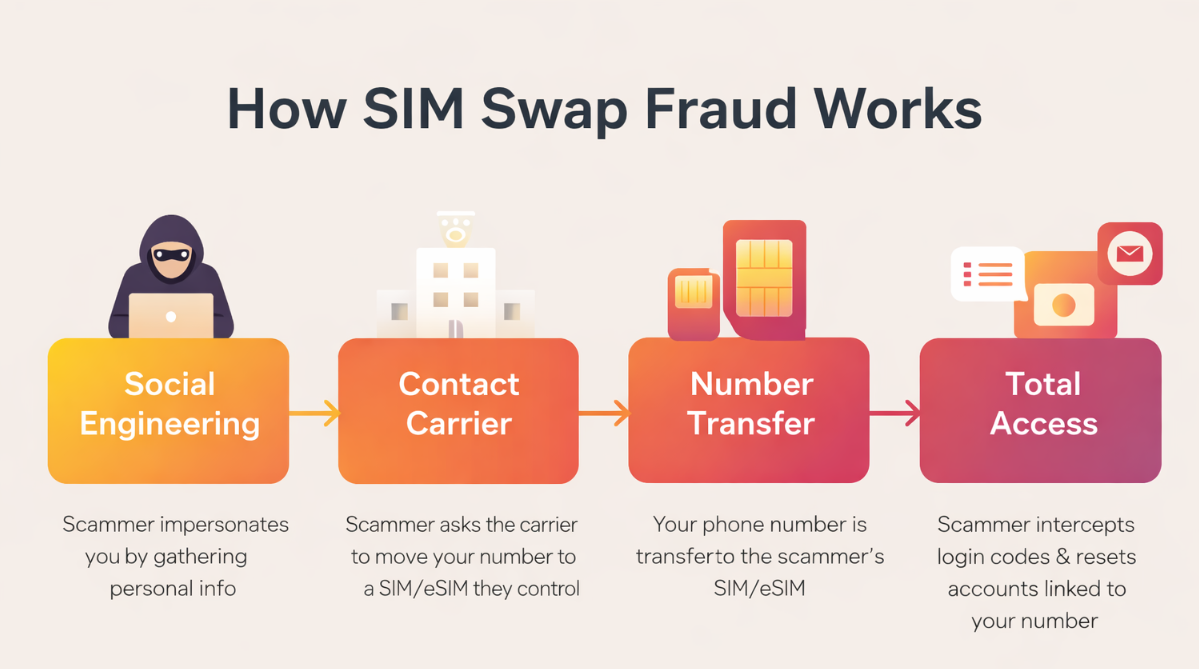
At its core, SIM swap fraud is when a scammer convinces a mobile carrier to move your phone number to a SIM card or eSIM profile they control. Once that happens, calls and texts stop reaching you and start landing on their device instead.
That single switch gives them a scary amount of power, because so many services still treat your phone number like a master key.
The “classic” version involves a physical SIM card. But here’s the important part: the fraud usually isn’t about stealing plastic. It’s about tricking the carrier into transferring your number.
Whether the number ends up on a physical SIM or an eSIM profile, the core problem is the same: someone else now receives your calls and SMS messages.
How SIM Swapping Scams Actually Happen
Social Engineering and Data Gathering
Most SIM swapping doesn’t start with hacking software.
It starts with homework.
Fraudsters piece together personal details from data leaks, social media, old emails, and casual posts about birthdays, travel plans, or where you live.
People share their full name, career, and city without realizing that it's enough for someone to impersonate them convincingly.
Then they rehearse.
They learn how carriers talk, what questions get asked, and how to sound frustrated but believable. That human element is what makes this scam so effective. It’s less about tech skills and more about manipulation.
Tricking the Carrier to Transfer Your Number
The next step is the most dangerous one.
Attackers contact your carrier and request a number transfer, often claiming they lost their phone, damaged their SIM, or upgraded devices. If security checks are weak or if the scammer has enough personal details to pass the questions, the carrier moves the number to a new SIM or eSIM profile.
In that moment, your phone can go silent.
As a traveler, this is especially brutal because it looks like a typical travel problem. You might blame spotty coverage, a tunnel, a rural area, or “airport networks being airport networks.”
Meanwhile, your number may already be in someone else’s hands.
What Happens After the Swap
Once scammers control your number, everything accelerates.
Password reset codes, login alerts, and two-factor authentication texts start flowing straight to them. I’ve watched accounts fall one by one, email first, then banking, then anything tied to that inbox or number.
What makes this so stressful is how fast it unfolds. You’re locked out, they’re already inside, and every minute matters. Even when you do everything right, recovering access can take days, sometimes longer.
The Real-World Impact of SIM Swap Fraud
Thomas Reuters
The financial side hits hardest. Unauthorized transfers, drained accounts, and fraudulent purchases can rack up real losses before you even realize what’s wrong.
Identity theft can follow, too, because access to your email and phone number makes it easier to reset credentials across platforms.
Beyond money, there’s the fallout people don’t always talk about. Losing access to email, cloud storage, crypto wallets, or even travel apps can derail an entire trip.
I’ve seen travelers miss flights, lose reservations, and scramble for help because their digital life vanished overnight.
That’s why understanding SIM swap fraud and preparing for it isn’t optional anymore.
Common Signs You Might Be a Victim
The first sign usually feels small, which is why people miss it.
Your phone suddenly loses service in a place where it usually works. Or you get a carrier message about a SIM or eSIM change you didn’t make.
When you’re traveling, it’s easy to blame inadequate coverage. But that quiet disconnect can be the moment your number has already moved.
Then the digital noise starts:
- Password reset emails you didn’t request
- Login alerts from apps you haven’t opened in days
- Friends messaging you asking why you’re sending strange texts
When those signals stack up, it’s rarely a coincidence. It’s your cue to act fast.
How to Prevent SIM Swap Fraud
Lock Down Your Carrier Account First
Your strongest protection starts with your mobile carrier.
We recommend setting a unique account PIN or passcode that isn’t tied to birthdays, addresses, or anything easy to guess. It feels basic, but that extra barrier can stop a scam in its tracks when someone tries to impersonate you.
Also, ask what extra safeguards your carrier offers for number changes. Depending on where you live, you might be able to add things like:
- A “port-out” lock or transfer freeze
- Extra identity verification for SIM/eSIM changes
- Account notes that require in-person verification for number transfers
Set this up before a trip. It’s a quiet win you’ll never notice, which is precisely the point.
Stop Using SMS as Your Only Two-Factor Key
Text messages are convenient until they’re the thing that gets intercepted.
SMS-based two-factor authentication falls apart the moment your number is compromised. Authenticator apps and hardware security keys don’t rely on your phone number, making them far more difficult to hijack.
If you change one thing after reading this article, make it this: move your most important accounts away from SMS-based security.
Start with:
- Banking and payments
- Password managers
- Any account that can reset other accounts
Once your key accounts use app-based authentication or passkeys, SIM-swap attempts hit a wall rather than a welcome mat.
Limit Personal Info Exposure Online
Oversharing doesn’t have to be dramatic to be dangerous. A public birthday here, a location tag there, and suddenly someone has enough pieces to play pretend with your identity.
We recommend doing a quick “digital travel prep” check:
- Make social profiles more private
- Remove your phone number from public pages
- Hide your birthday, address, and “security question” style details
- Close old accounts you don’t use anymore
Less data out there means fewer ways for someone to sound like you.
Treat Urgency Like a Red Flag

A nudge precedes many SIM swap attempts: a fake support email, a rushed text, or a call that pressures you to “verify” something quickly.
When you’re traveling and already distracted, urgency is the perfect trap.
If something feels rushed, pause. Real companies don’t mind waiting. Absolute security doesn’t demand panic. That moment of hesitation can be the difference between staying in control and losing it.
How eSIMs Change the Game (And What They Don’t Change)
Here’s the key truth: eSIMs don’t automatically prevent SIM swap fraud.
SIM swap fraud isn’t about the format of the SIM. It’s about whether someone can convince your carrier to transfer your phone number. If your carrier’s verification is weak, an attacker can still pull off a transfer, whether the number ends up on an eSIM profile or a physical SIM.
So the “game” doesn’t change as much as the battleground does.
With eSIMs and modern travel setups, account security matters more than ever:
- Strong passwords
- Account locks and transfer PINs with your carrier
- Two-factor methods that don’t depend on SMS
- A recovery plan you can execute quickly
How Using an eSIM Helps Reduce the Damage From SIM Swap Fraud
Let’s be super clear, because this is where a lot of articles get fuzzy.
A travel eSIM like Airalo doesn’t control your main phone number with your home carrier, so it can’t directly stop someone from trying to transfer that number.
What it can do, and this is a big deal when you’re on the road, is help you stay connected if your primary line suddenly goes dark. And when SIM swap fraud happens, staying connected is how you fight back.
You Can Stay Online While You Lock Things Down
If your number gets transferred, you might lose SMS and calls. But your next steps require internet:
You need to contact your bank, secure your email, check account alerts, reset passwords, and sometimes verify identity through apps.
Airalo helps by keeping you connected through mobile data, even if your main line is having a very bad day. That means you can respond immediately instead of hunting for café Wi-Fi like it’s a rare Pokémon.
You’re Less Dependent on “Random Wi-Fi With a Password on the Wall”
When you’re trying to regain access to accounts, “free Wi-Fi” is not the vibe.
Public networks can be unreliable, slow, or risky, and they love to drop at the exact moment you’re entering a verification code.
Having your own secure mobile connection gives you more control during a stressful moment. You’re not stuck waiting, not forced to borrow someone’s hotspot, and not making security decisions while panicking.
It Supports Stronger Security Habits
One of the smartest moves against SIM swap fraud is switching key accounts away from SMS-based two-factor authentication.
To do that, you need reliable connectivity for things like:
- Setting up authenticator apps
- Enabling passkeys
- Updating recovery emails and backup codes
- Using banking apps that verify actions inside the app, not via SMS
eSIMs don’t magically remove risk, but they help you stay consistently online so those stronger security options actually work when you need them.
It Makes Travel Feel Normal Again, Even When Tech Isn’t
SIM swap fraud is stressful partly because it disrupts travel. Suddenly, you can’t access bookings, message anyone, or confirm what’s happening.
Reliable connectivity gives you back your footing. You can keep moving, keep communicating, and handle the problem with a clear head.
And that’s the real win: less panic, more control.
What to Do If You Think You’ve Been Targeted
When you suspect something’s wrong, act before you analyze.
Contact your mobile carrier immediately and tell them you believe your number has been compromised. Ask them to freeze the account or lock number transfers until you regain control.
Then work outward:
- Reset your email password first
- Secure banking and payment accounts
- Check for unauthorized password resets and logins
- Log out of active sessions where possible
- Switch two-factor authentication away from SMS
- Save and store backup codes somewhere safe
It’s not glamorous, but it’s effective.
Your goal isn’t just to regain access. It’s to make sure that once you’re back in control, no one can slip in again.
Stay Connected Without the Stress
After years of traveling, I’ve learned that SIM swap fraud isn’t some abstract tech problem. It’s a real-world risk that shows up when you’re tired, rushed, and assuming a lost signal is no big deal.
Understanding how SIM swapping works, spotting warning signs early, and tightening your carrier and account security can make the difference between a minor inconvenience and losing access to everything that matters.
And that’s also why we’re intentional about how you stay connected when you travel.
If your primary line gets disrupted, having a travel eSIM can help you stay online, take action fast, and keep your trip from derailing while you lock things down.
Because staying connected should make travel feel freer, not riskier. A secure setup, plus reliable connectivity you control, is a big step toward keeping it that way.