
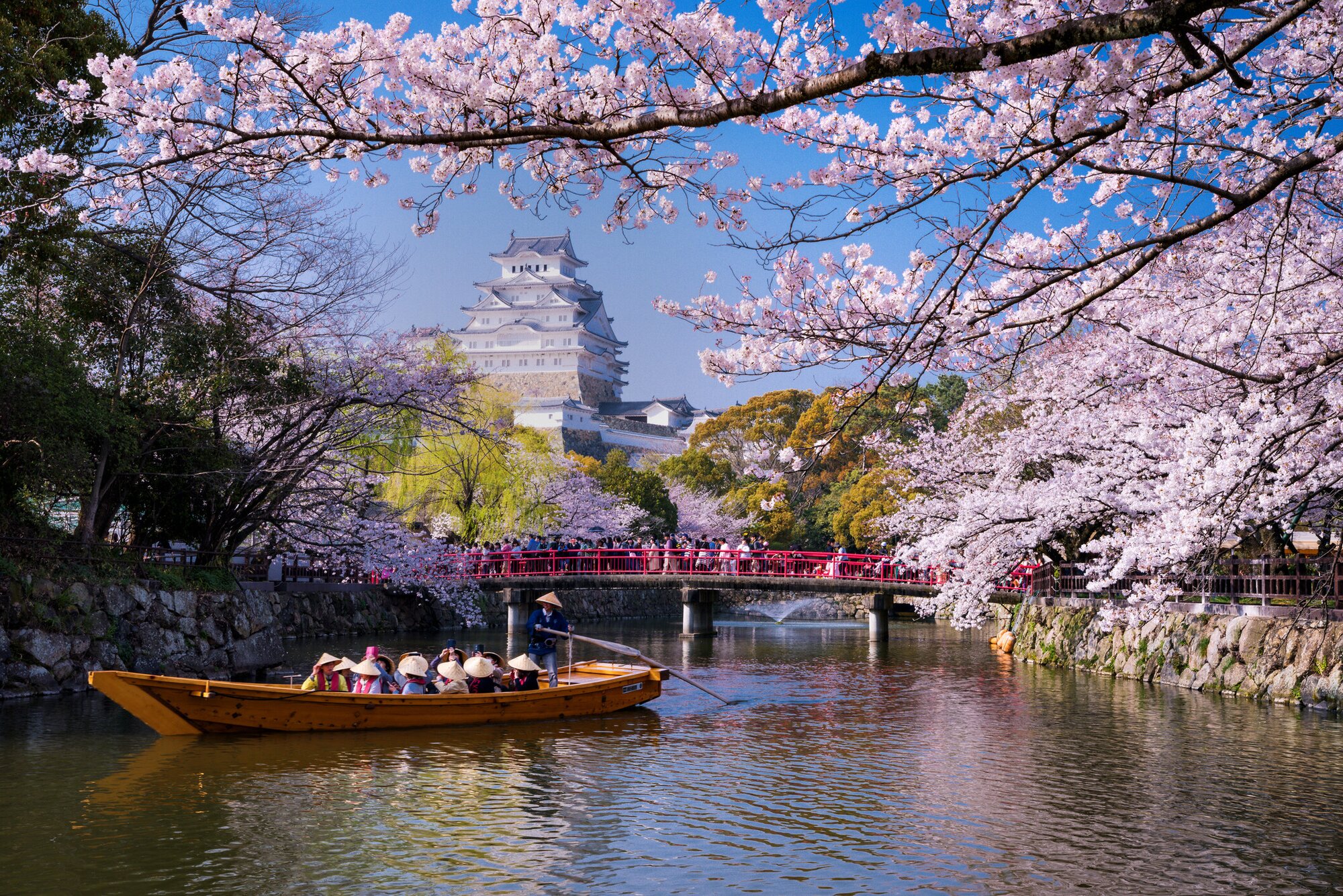
For years, Arakurayama Sengen Park in Fujiyoshida, Japan, topped every must-visit cherry blossom location list.
But the festival got cancelled in 2026 because the crowds became a textbook example of what it looks like to be a bad tourist in Japan.
So, this is the perfect moment to rethink your Japan itinerary and explore other parts of the country.
Japan has hundreds of stunning sakura spots, and this guide walks you through the best cherry blossom alternatives across Tokyo, Kyoto, Osaka, and beyond.
Grab your Japan eSIM or Asia eSIM and let's find your perfect sakura spot.
Terms & Conditions apply.
Why Fujiyoshida Cancelled Its Cherry Blossom Festival (And Where to Go Instead)
There's something almost spiritual about standing under a canopy of cherry blossoms in full bloom. The petals drift down like snow, the air smells faintly sweet, and for a moment, everything else just stops.
But in February 2026, one of Japan's most iconic cherry blossom viewing spots had to pull the plug entirely.
Fujiyoshida (富士吉田市) cancelled its decade-old Arakurayama Sengen Park (新倉山浅間公園) Cherry Blossom Festival after the situation spiraled out of control.
During peak season, the small city was getting slammed with tens of thousands of visitors daily.
Traffic ground to a halt, and tourists trespassed on private property to get the perfect shot.
The park remains open, but without festival infrastructure or municipal support.
You can still go, but you'll be navigating crowds with zero crowd management, which sounds like the opposite of a peaceful hanami experience.
Here's the good news: Japan has hundreds of equally stunning cherry blossom spots.
Pro Tip: The 2026 blooms are forecast to arrive 3-8 days earlier than historical averages due to warmer March temperatures. Check the Japan Meteorological Corporation's weekly forecasts starting mid-February so you don't miss peak bloom.
What to Pack
Airalo’s Japan or Asialink eSIM
Airalo’s Japan and Asia eSIMs can make a cherry blossom trip around Japan feel far more seamless, especially if you are travelling between multiple bloom spots instead of staying in just one city.
An eSIM helps you stay connected while you are on the move, so you can:
- Activate your plan in minutes
- Check maps, train times, and route changes easily
- Avoid relying on public Wi-Fi
- Use travel apps for navigation, messaging, and bookings
- Enjoy clear pricing with no surprise roaming fees
- Keep your main number active with dual-SIM compatibility
- Choose a Japan-only plan or a regional plan if Japan is part of a bigger trip
Layers for spring weather
Pack for mixed spring conditions. Cherry blossom season in Japan can bring sunny afternoons, chilly mornings, breezy evenings, and the occasional rain shower — sometimes all in the same day.
This is especially true if you are visiting different parts of the country, since temperatures can vary widely between regions. I would bring light layers that are easy to add or remove throughout the day, plus a thin waterproof jacket in case the weather changes suddenly.
Comfortable walking shoes
You do not need heavy-duty footwear for a cherry blossom trip, but you will want shoes you can walk in for hours without regretting it.
The best blossom-viewing spots often involve long walks through parks, castle grounds, riverside paths, temple areas, and quiet local streets. You may also end up standing around for a while once you find a good viewpoint or photo spot. Comfortable shoes will make the whole day much more enjoyable.
When to See Cherry Blossoms in Japan (2026 Forecast)
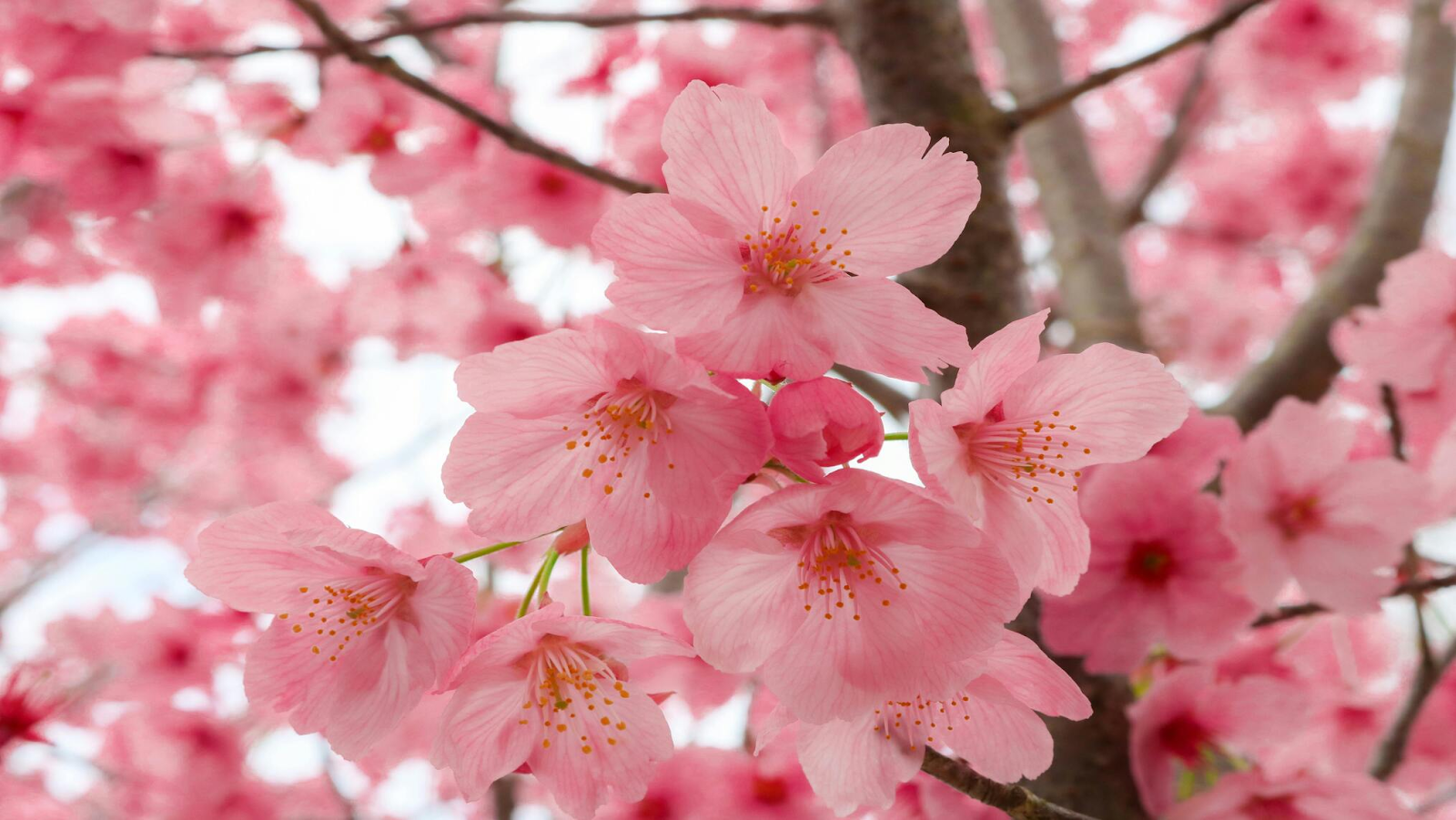
- Kaika (First Bloom): When 20% of blossoms open
- Mankai (Full Bloom): When 80-90% of blossoms open, usually 7 days after the first bloom
- Peak only lasts 1-2 weeks total
- Weather can shift dates by 3-5 days, so stay flexible
Southern Japan (Kyushu & Shikoku)
- Fukuoka: First blooms around March 22, peak around March 31
- Kagoshima: First blooms around March 24, peak early April
- Kochi: First blooms around March 21
Central Japan (The Golden Triangle)
- Tokyo: First blooms around March 20-22, peak around March 28-29
- Kyoto: First bloom March 24-25, full bloom April 1-2
- Osaka: First blooms around March 25, peak around April 1-2
- Nagoya:First bloom March 19-21, full bloom March 28-30
- Himeji: First blooms around March 26, peak around April 2
Prime Travel Window: March 29 to April 7, 2026 covers peak bloom in Tokyo, Kyoto, and Osaka
Central Mountains & Northern Honshu:
- Kanazawa: First blooms around March 31, peak around April 6
- Takayama: Peak around April 10-12
- Mt. Fuji Area (Kawaguchiko): Peak around mid-April
- Sendai: First blooms around April 6-7, peak around April 11
- Niigata: First blooms around April 5, peak around April 10
Northern Japan (Tohoku & Hokkaido):
- Hirosaki (Aomori): Peak late April to early May
- Kakunodate (Akita): Peak late April to early May
- Sapporo: First bloom around April 28, Peak around May 1-3
- Hakodate: Peak around late April to early May
Pro Tip Box: 2026 blooms are forecast 3-8 days earlier than historical averages due to warmer March temperatures. Check the Japan Meteorological Corporation for weekly updates starting mid-February.
Best Places to See Cherry Blossoms in Tokyo
1. Shinjuku Gyoen
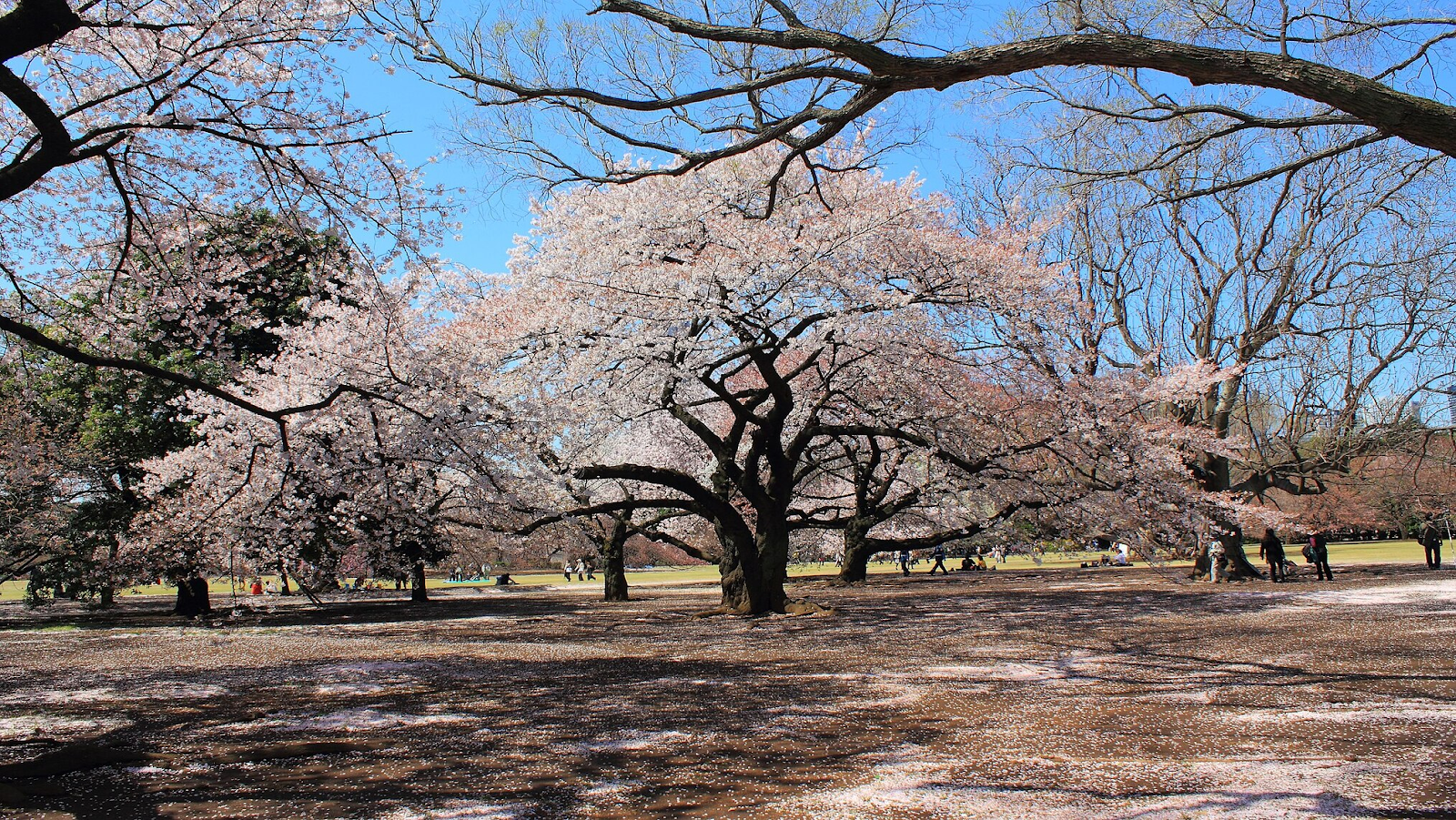
If you want breathing room during sakura season, Shinjuku Gyoen (新宿御苑) delivers.
This massive park spreads across 144 acres and mixes French formal gardens, English landscapes, and traditional Japanese design.
All of these are dotted with over 1,000 cherry trees representing more than a dozen varieties.
The no-alcohol policy keeps things calmer than the party-heavy parks.
Also, because early and late bloomers are planted throughout, you get a solid 2–3 week viewing window instead of the usual week-long rush.
- Expected Bloom: Late March to early April
- Duration: Extended season thanks to multiple varieties (early and late bloomers)
- The Scene: Over 1,000 cherry trees across more than a dozen varieties in a massive park with French, English, and Japanese garden sections
- Getting There: From Shinjuku Station, take the east exit and walk about 10 minutes to the Shinjuku Gate.
If you're on the Marunouchi Line, get off at Shinjuku Gyoenmae Station (新宿御苑前駅) and use Exit 1. You'll be at the main gate in about 5 minutes.
The JR Sobu Line also works: hop off at Sendagaya Station (千駄ヶ谷駅) and the Sendagaya Gate is a quick 5-minute walk.
- Best Time to Visit: 8:30 AM opening to avoid crowds
2. Ueno Park
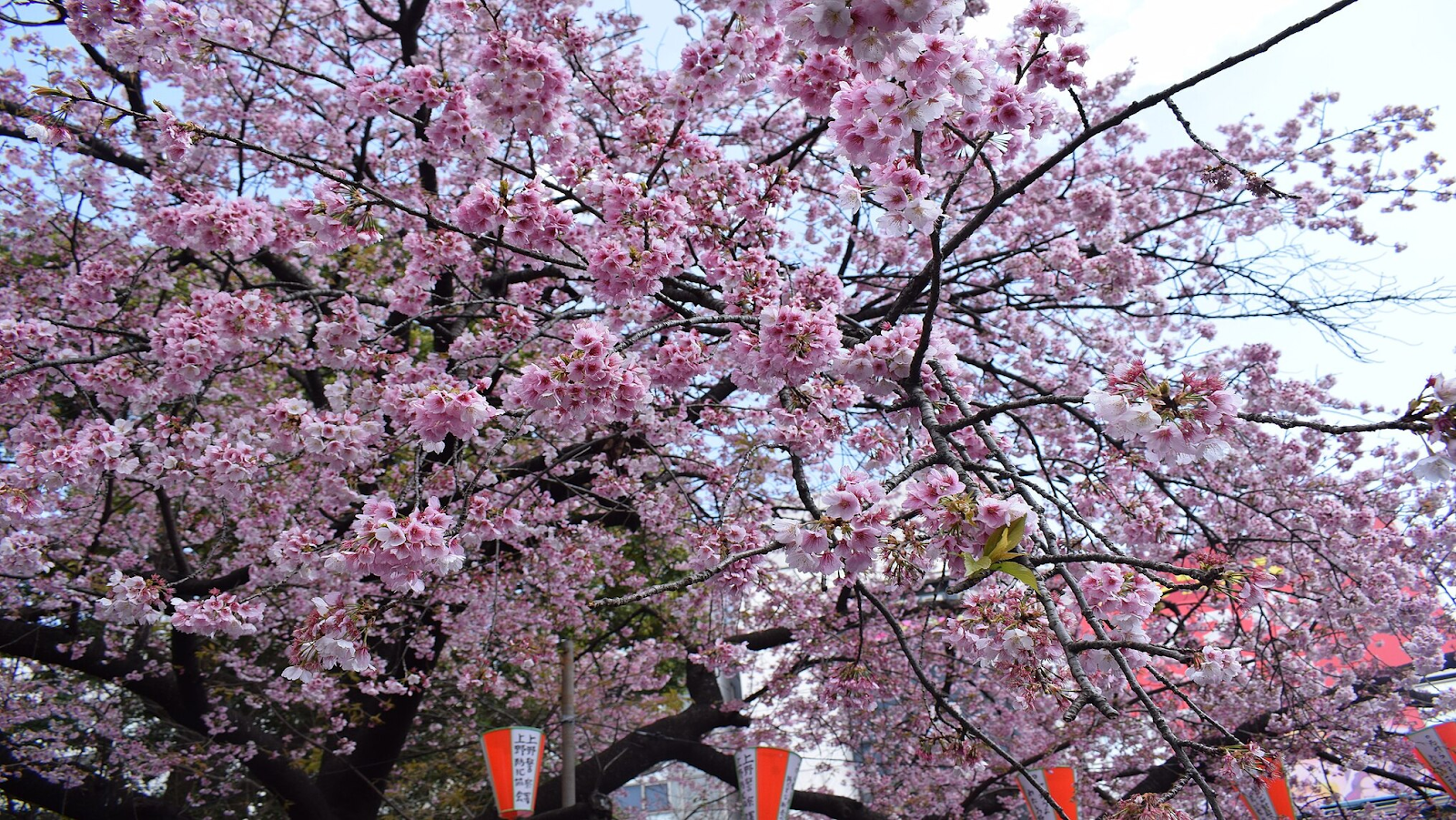
Ueno Park (上野公園) is where Tokyo does hanami the old-school way.
Over 1,000 trees line the street toward the National Museum and wrap around Shinobazu Pond.
When they bloom, the entire park transforms into one massive outdoor party complete with food stalls, drinks flowing, and groups staking out prime spots from dawn.
The trees here tend to bloom a couple days earlier than other Tokyo spots, and the crowds match the energy, especially on weekends when it feels like half the city showed up.
- Expected Bloom: Late March to early April
- Duration: 7–10 days at peak
- The Scene: Over 1,000 trees lining the street toward the National Museum and around Shinobazu Pond
- Getting There: From anywhere in Tokyo, take the JR Yamanote Line, Ginza Line, or Hibiya Line to Ueno Station (上野駅). Use the Park Exit (it's clearly marked) and you'll walk straight into the cherry blossom chaos.
- Crowd Warning: This is Tokyo's most popular hanami spot. Expect serious crowds during peak bloom, especially weekends.
3. Chidorigafuchi
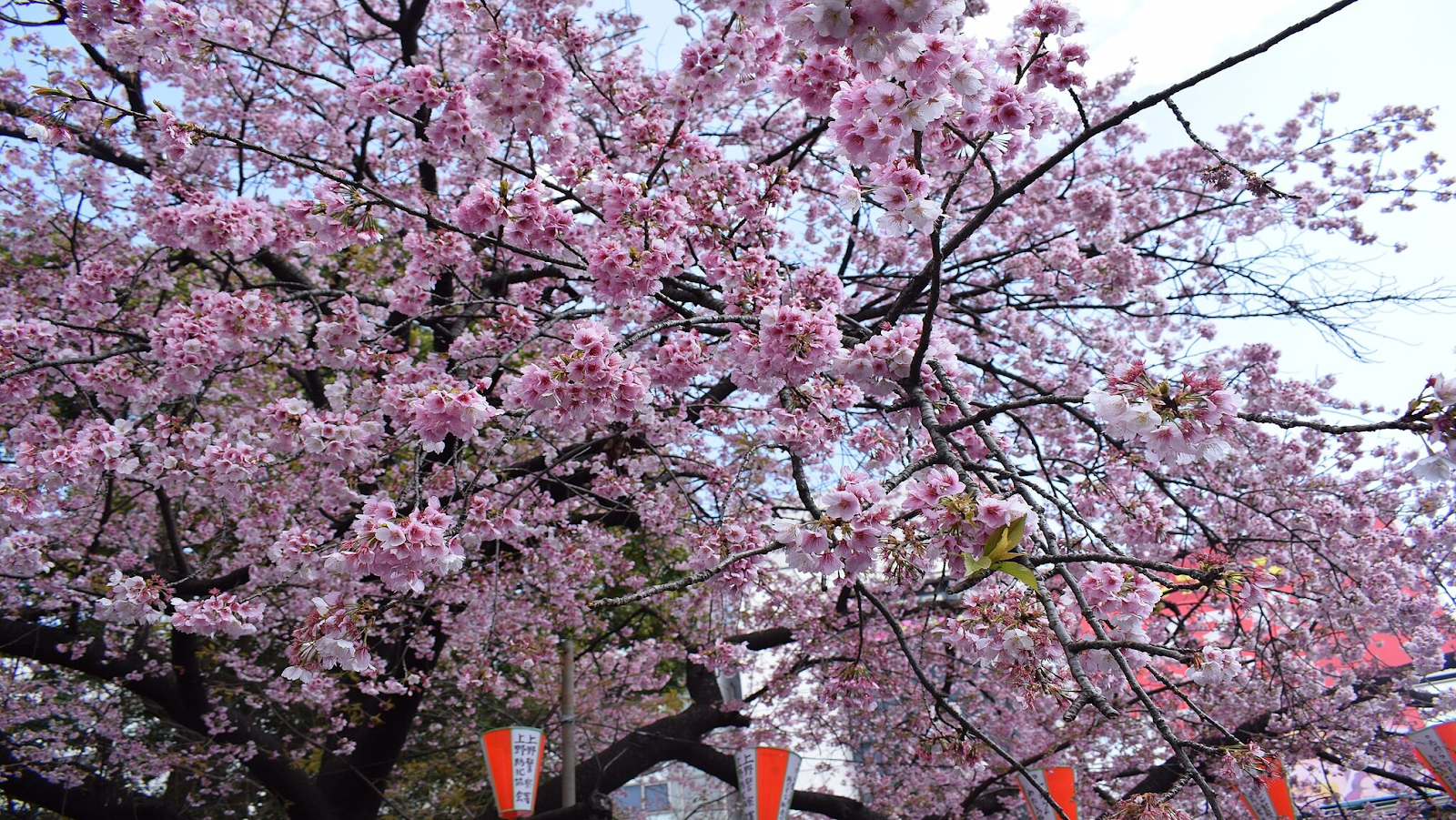
Chidorigafuchi (千鳥ヶ淵) wraps cherry trees around the moats of the former Edo Castle near Kitanomaru Park.
It creates one of Tokyo's most stunning cherry blossom scenes.
You can rent a rowboat and drift under the cherry canopy while petals fall into the water around you, which is exactly as magical as it sounds.
Evening illumination turns the whole area into something out of a dream, and nearby Yasukuni Shrine adds another 1,000 trees plus food stands if you want to keep the experience going.
Note that there are no picnic areas here, but worth it for the views
- Expected Bloom: Late March to early April
- Duration: 7–10 days
- The Scene: Hundreds of cherry trees decorating the moats of former Edo Castle around Kitanomaru Park
- Getting There: Take the Toei Shinjuku Line, Tokyo Metro Hanzomon Line, or Tozai Line to Kudanshita Station (九段下駅). Exit 2 puts you right at the moat in about 2 minutes.
Best Places to See Cherry Blossoms in Kyoto
1. Philosopher's Path
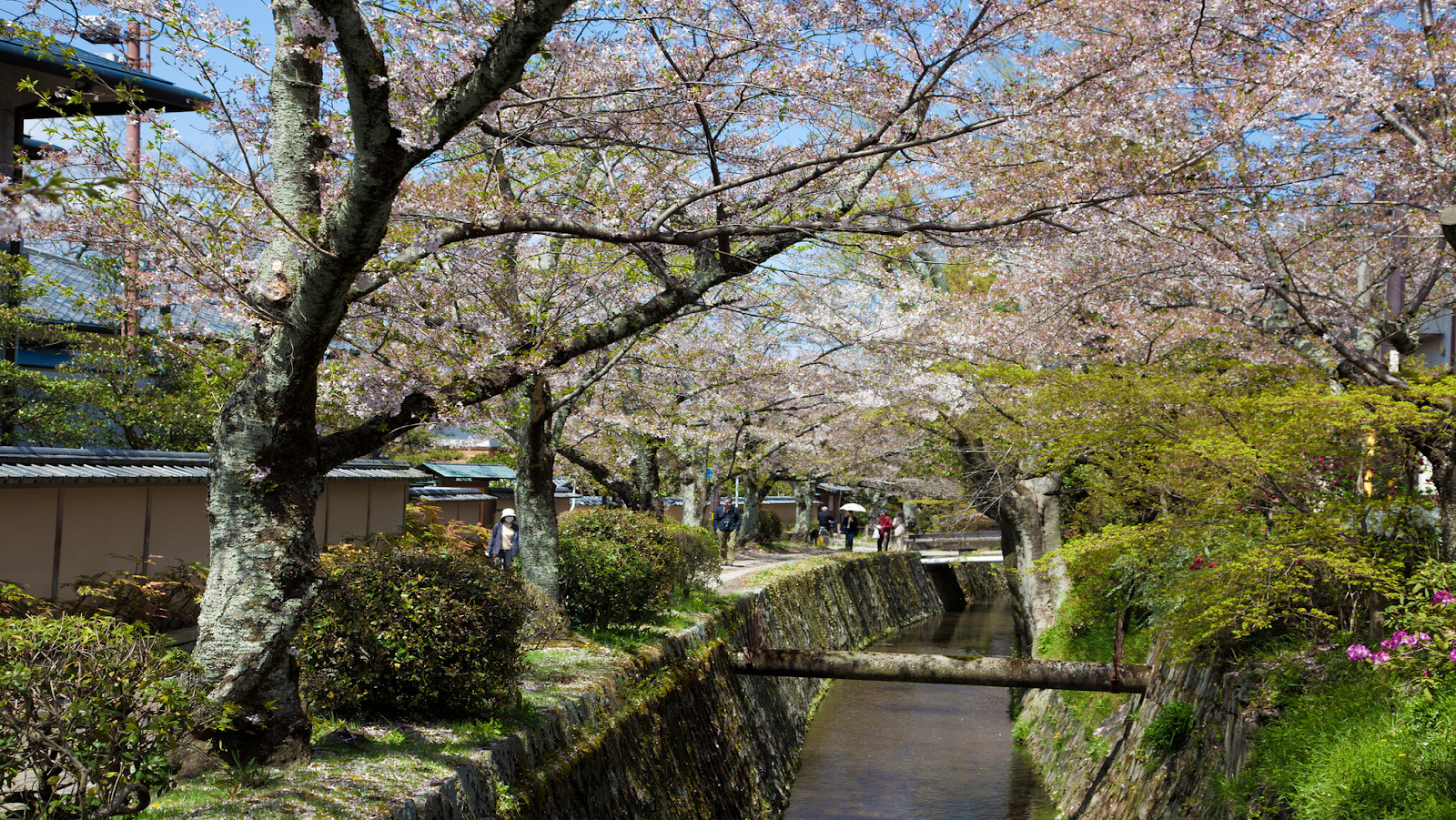
Philosopher’s Path (哲学の道) is one of Kyoto’s best cherry blossom walks.
This 2-kilometer canal path connects Ginkakuji (銀閣寺 / Silver Pavilion) and Nanzenji Temple (南禅寺). Hundreds of cherry trees line the route, creating a long, pleasant blossom walk through one of Kyoto’s more atmospheric neighborhoods.
Part of the appeal is that it does not feel like just one photo stop. You can walk slowly, stop at small cafés, shops, temples, and shrines, and treat it like a half-day neighborhood stroll.
Compared with Kyoto’s most famous temple grounds, it usually feels a little less intense, though it still gets busy in peak season.
- Expected Bloom: Early April
- Duration: 7–10 days
- The Scene: Pleasant canal path connecting Ginkakuji (Silver Pavilion) and Nanzenji Temple, lined by hundreds of cherry trees
- Getting There: Take bus number 5, 17, or 100 from Kyoto Station to either the Ginkakuji-michi stop (銀閣寺道) for the north entrance near Silver Pavilion, or the Nanzenji-Eikando-michi stop (南禅寺永観堂道) for the south entrance.
- Best Experience: Walk it early morning, stop at temples along the way
2. Maruyama Park
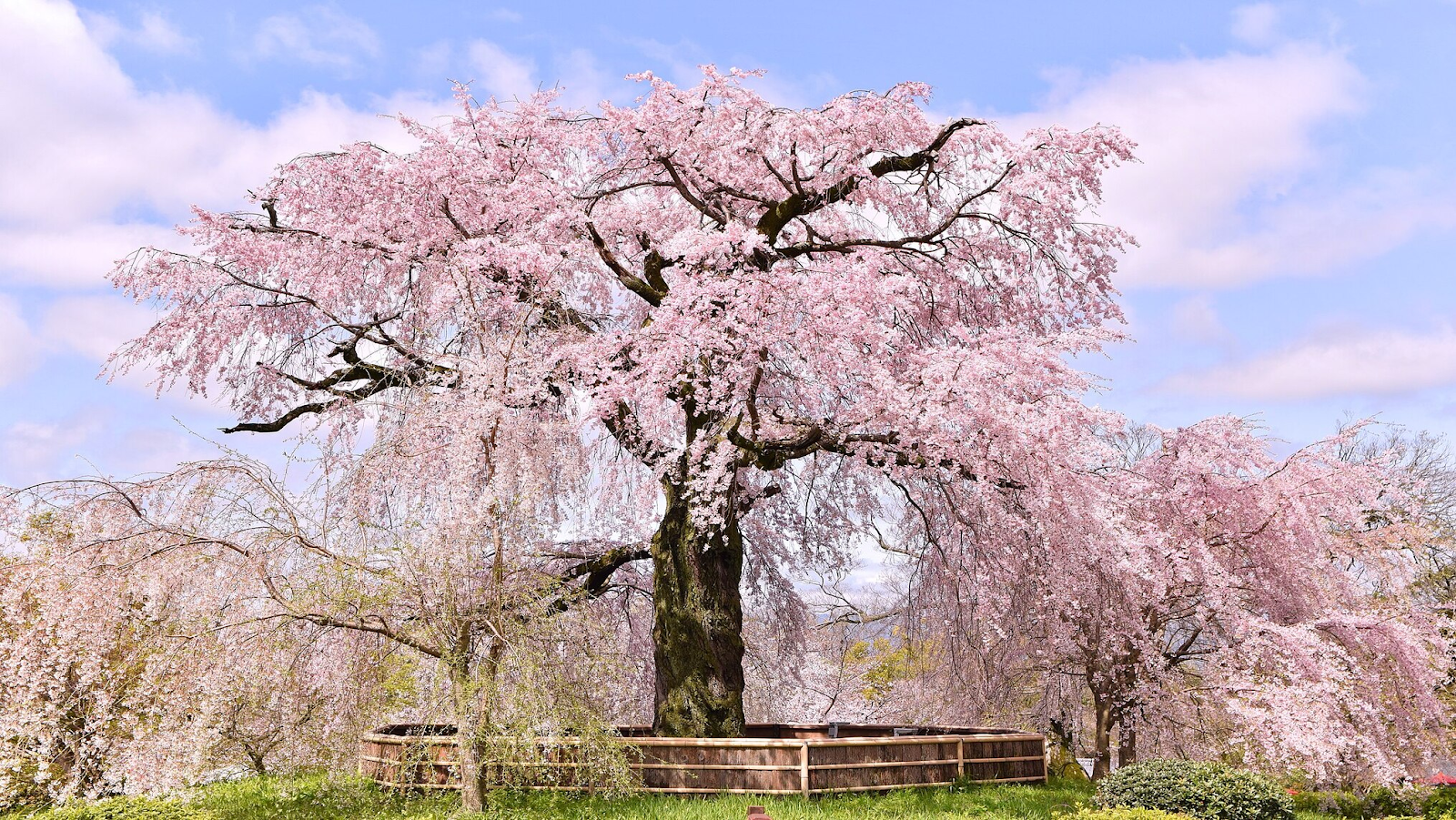
The main attraction is a large weeping cherry tree (shidarezakura / しだれ桜) that is illuminated at night. During blossom season, huge crowds gather specifically to see it.
The park has a much more festive feel than quieter blossom spots. Food stalls and temporary dining setups appear under the trees, and people come here to eat, drink, and celebrate sakura season in a lively atmosphere.
It is also right beside Yasaka Shrine (八坂神社) in Gion, so the location is especially convenient if you want to combine cherry blossom viewing with one of Kyoto’s most famous districts.
- Expected Bloom: Early April
- Duration: 7–10 days
- The Scene: Kyoto's most popular hanami party spot next to Yasaka Shrine
- Getting There: The park sits right next to Yasaka Shrine in the Gion district. Take bus 100 or 206 from Kyoto Station to the Gion stop (祇園), then walk through Yasaka Shrine to reach the park.
- Crowd Level: Very high, especially during illumination hours
3. Arashiyama
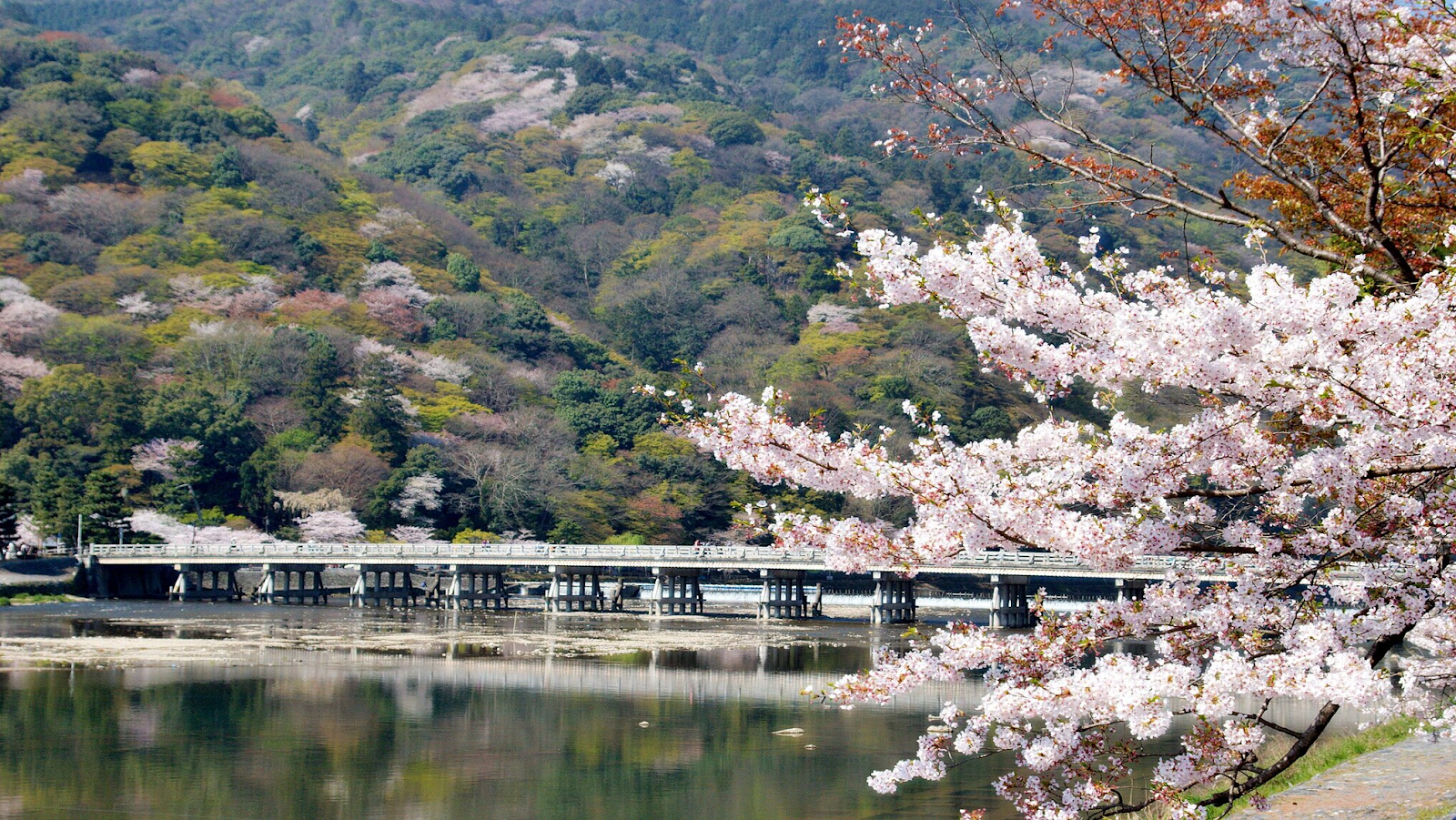
Arashiyama (嵐山) gives you cherry blossoms with mountain and river views.
Plus you can knock out the famous bamboo grove in the same trip.
Cherry trees cluster around Togetsukyo Bridge (渡月橋) at the foot of the Arashiyama mountains, especially in riverside Nakanoshima Park (中之島公園)
It gives you a more relaxed atmosphere than the formal temple grounds elsewhere in Kyoto.
The mountain backdrop adds drama to the whole scene, and you can easily spend a full day combining cherry viewing with the bamboo grove, Tenryuji Temple (天龍寺), and even the monkey park if you're feeling adventurous.
- Expected Bloom: Early April
- Duration: 7–10 days
- The Scene: Cherry trees around Togetsukyo Bridge at the foot of Arashiyama mountains, especially in riverside Nakanoshima Park
- Getting There: From Kyoto Station, take the JR Sagano Line to Saga-Arashiyama Station (嵯峨嵐山駅). Walk south toward the river and you'll hit Togetsukyo Bridge in about 10 minutes.
Alternatively, take the Keifuku Arashiyama Line (the cute retro tram) to Arashiyama Station (嵐山駅) if you're coming from central Kyoto.
Best Places to See Cherry Blossoms in Osaka
1. Osaka Castle Park
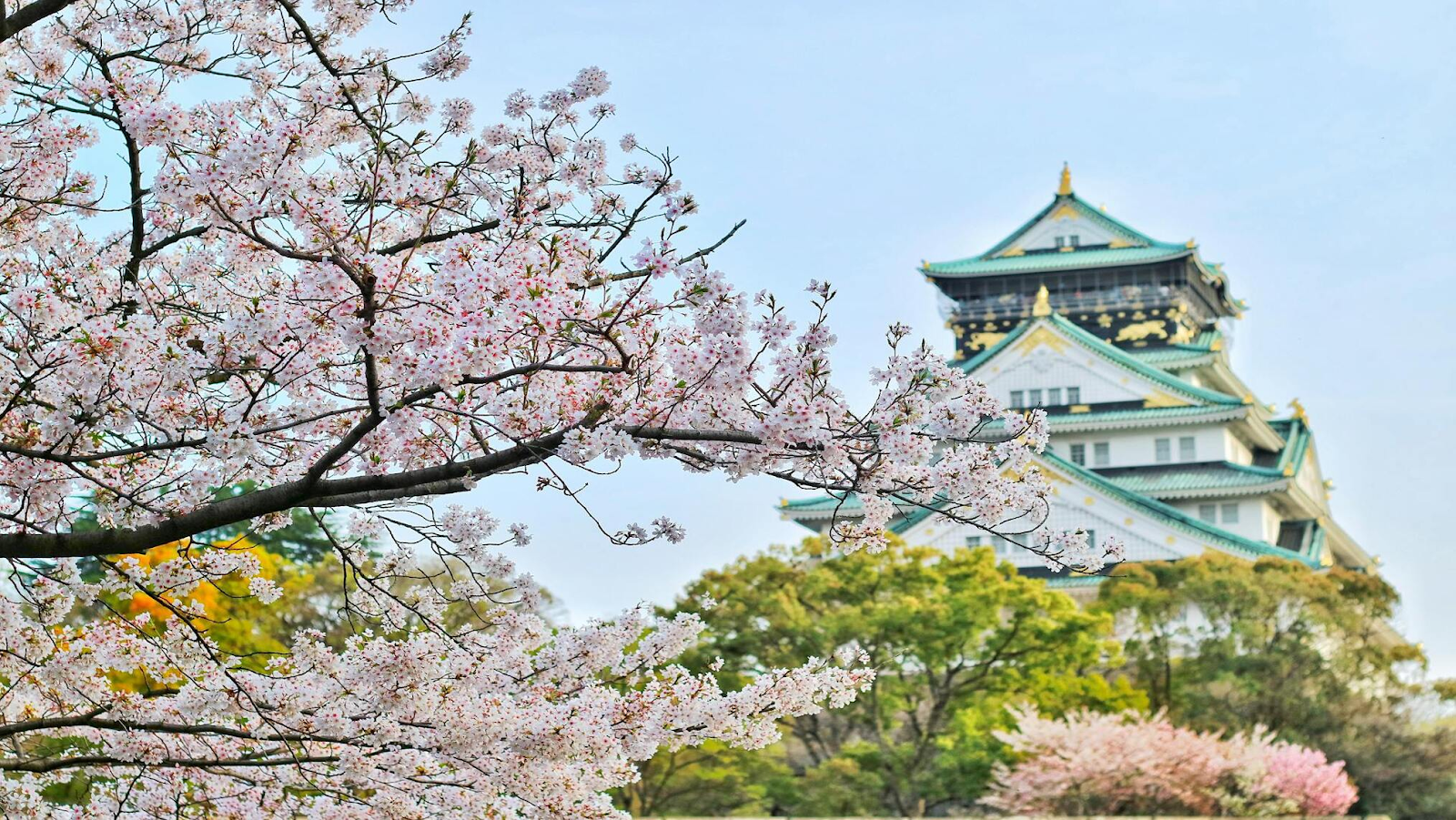
Osaka Castle Park (大阪城公園) is one of the most iconic sakura spots in Osaka.
The main highlight is the view of pink cherry blossoms framed against the white tower of Osaka Castle. It is a classic spring scene and one of the city’s best-known photo spots.
The park has more than 4,000 cherry trees spread across wide grounds, so it usually feels easier to explore than tighter, more crowded blossom sites.
If you want a more relaxed picnic setting, head to Nishinomaru Garden. It offers open lawns, lots of blossoms, and some of the best castle views in the park.
- Expected Bloom: Early April
- Duration: 7–10 days
- The Scene: Over 4,000 cherry trees on spacious castle grounds, a white castle tower rising above pink blooms.
- Getting There: From Osaka Station (大阪駅), take the JR Loop Line to Osakajokoen Station (大阪城公園駅), about a 5-minute ride. From Namba, take the Chuo Subway Line to Morinomiya Station (森ノ宮駅) and walk about 5 minutes to the south entrance.
2. Kema Sakuranomiya Park
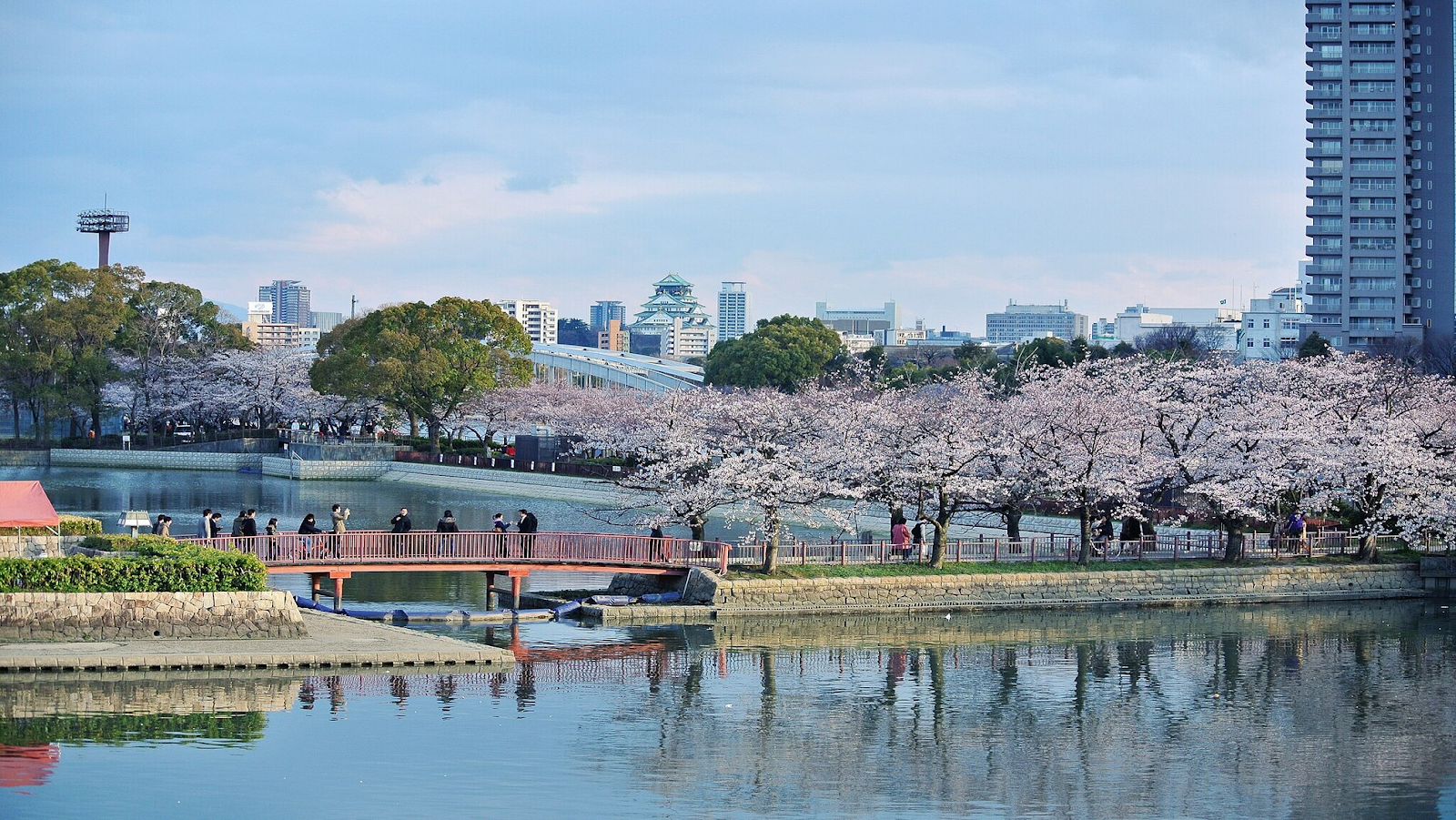
Kema Sakuranomiya Park (毛馬桜之宮公園) is built for wanderers.
Kema Sakuranomiya Park (毛馬桜之宮公園) is one of Osaka’s best cherry blossom spots for a long, relaxed walk.
Nearly 5,000 cherry trees line the Okawa River (大川) for several kilometers, creating a continuous stretch of blossoms along the water.
This is not the kind of place where you chase one exact photo spot. The appeal is the overall experience. You walk, pause when the view looks good, and keep going.
During sakura season, river cruise boats also run through the area. That makes it a nice option if you want a different perspective or a break from walking.
- Expected Bloom: Early April
- Duration: 7–10 days
- The Scene: Nearly 5,000 cherry trees lining the Okawa River for several kilometers
- Getting There: From Osaka Station, take the JR Loop Line to Sakuranomiya Station (桜ノ宮駅), about a 3-minute ride. Walk out of either exit, and you're immediately alongside the river and the trees.
3. Expo '70 Commemorative Park
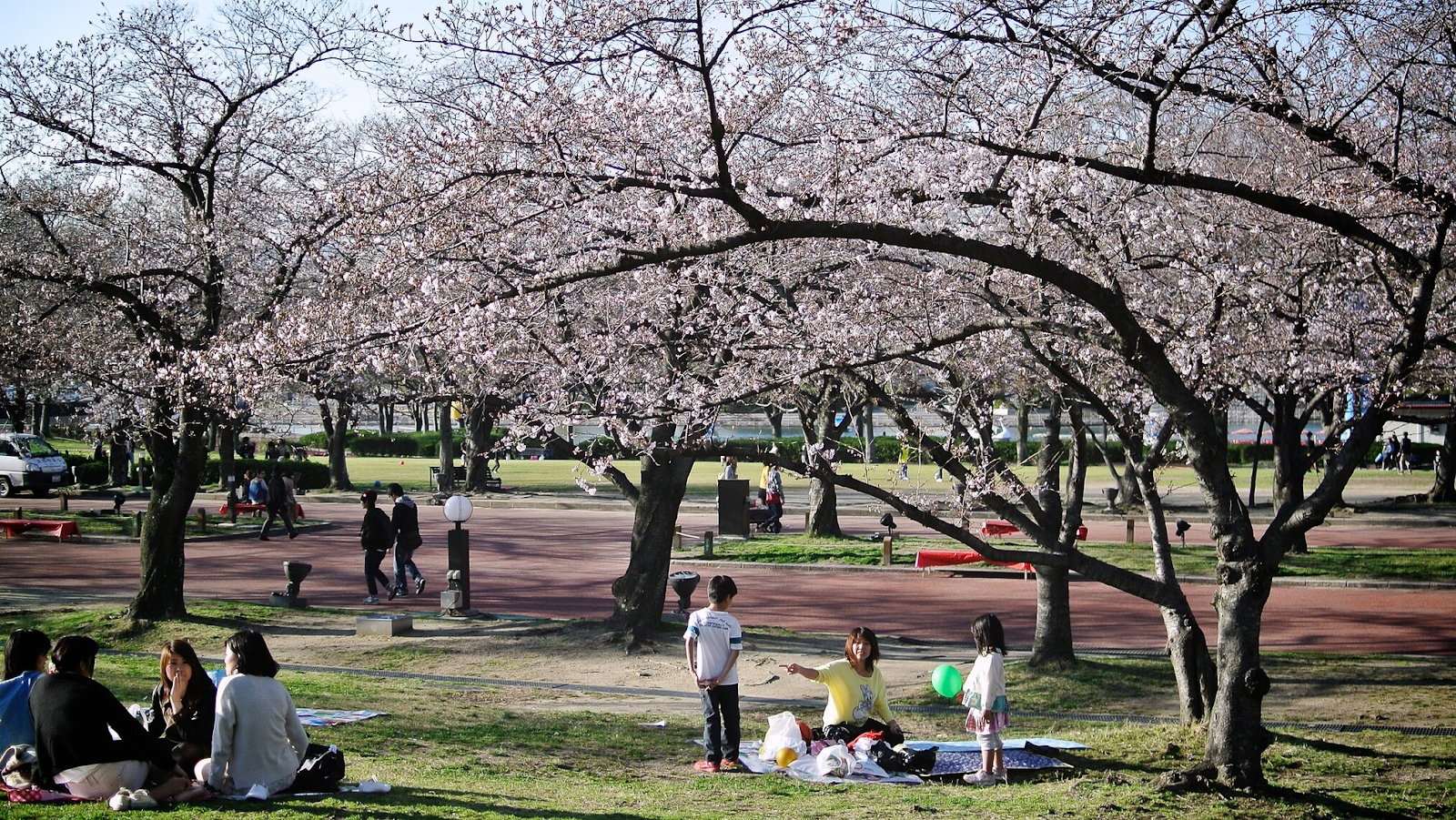
Expo ’70 Commemorative Park (万博記念公園) is a strong choice if you want more space and fewer crowds.
Built on the former site of the 1970 World Exposition, this large public park has more than 5,000 cherry trees spread across broad lawns and open parkland.
Compared with central blossom spots like Osaka Castle Park, it usually feels less hectic. That extra breathing room is a big part of the appeal.
The park also hosts evening illuminations during the sakura season, which adds another reason to visit.
- Expected Bloom: Early April
- Duration: 7–10 days
- The Scene: Over 5,000 cherry trees in a massive public park built on the former World Exposition site
- Getting There: From Osaka Station, take the Midosuji Subway Line to Senri-Chuo Station (千里中央駅). Then transfer to the Osaka Monorail toward Kadoma-shi and get off at Banpaku-Kinen-Koen Station (万博記念公園駅).
The park entrance is a 5-minute walk from the station exit.
Places to See Cherry Blossoms Outside Tokyo, Kyoto, and Osaka
1. Mt. Yoshino, Nara
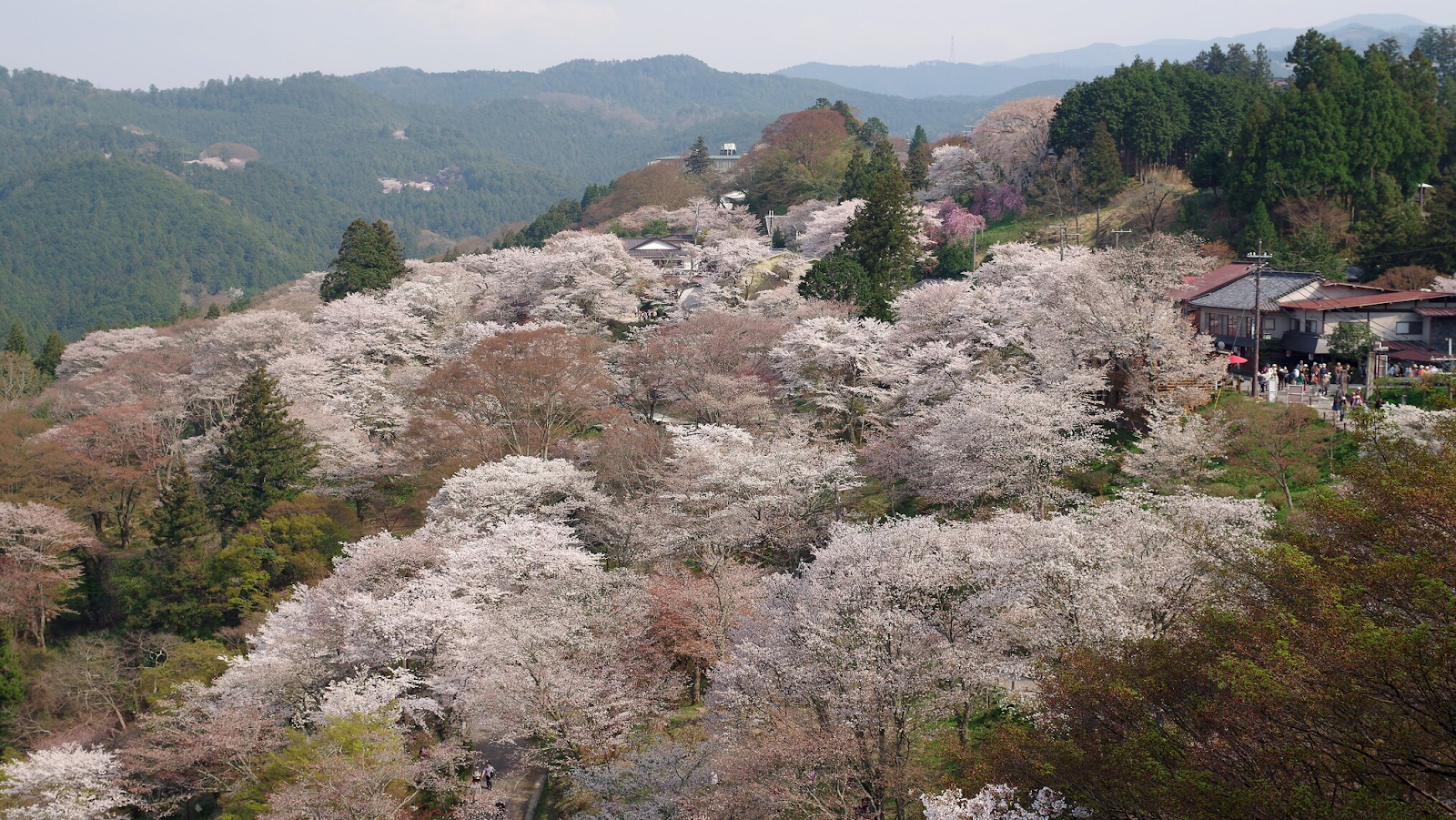
Mt. Yoshino (吉野山) is one of Japan’s most iconic cherry blossom destinations.
Around 30,000 cherry trees cover the mountainside, creating a bloom that unfolds in stages as you move higher in elevation. That gives Mt. Yoshino a longer and more layered blossom season than many flatter city parks.
It is also more than just a scenic stop. Mt. Yoshino is a UNESCO World Heritage site and a historic pilgrimage destination with over a thousand years of cultural significance.
- Expected Bloom: Early to mid-April (April 7–17, 2026)
- Duration: Extended season due to elevation changes
- The Scene: Approximately 30,000 cherry trees covering the mountainside at different elevations
- Getting There: From Osaka Namba Station (大阪難波駅), take the Kintetsu Osaka Line Limited Express directly to Yoshino Station (吉野駅), about 1 hour 20 minutes. From Yoshino Station, take the Yoshino Ropeway (吉野ロープウェイ) up to the lower mountain area, then walk or take a shuttle bus further up depending on how far you want to go.
- Crowd Warning: Roads close to cars during peak bloom. Take the train. This isn't a suggestion.
2. Himeji Castle, Hyogo
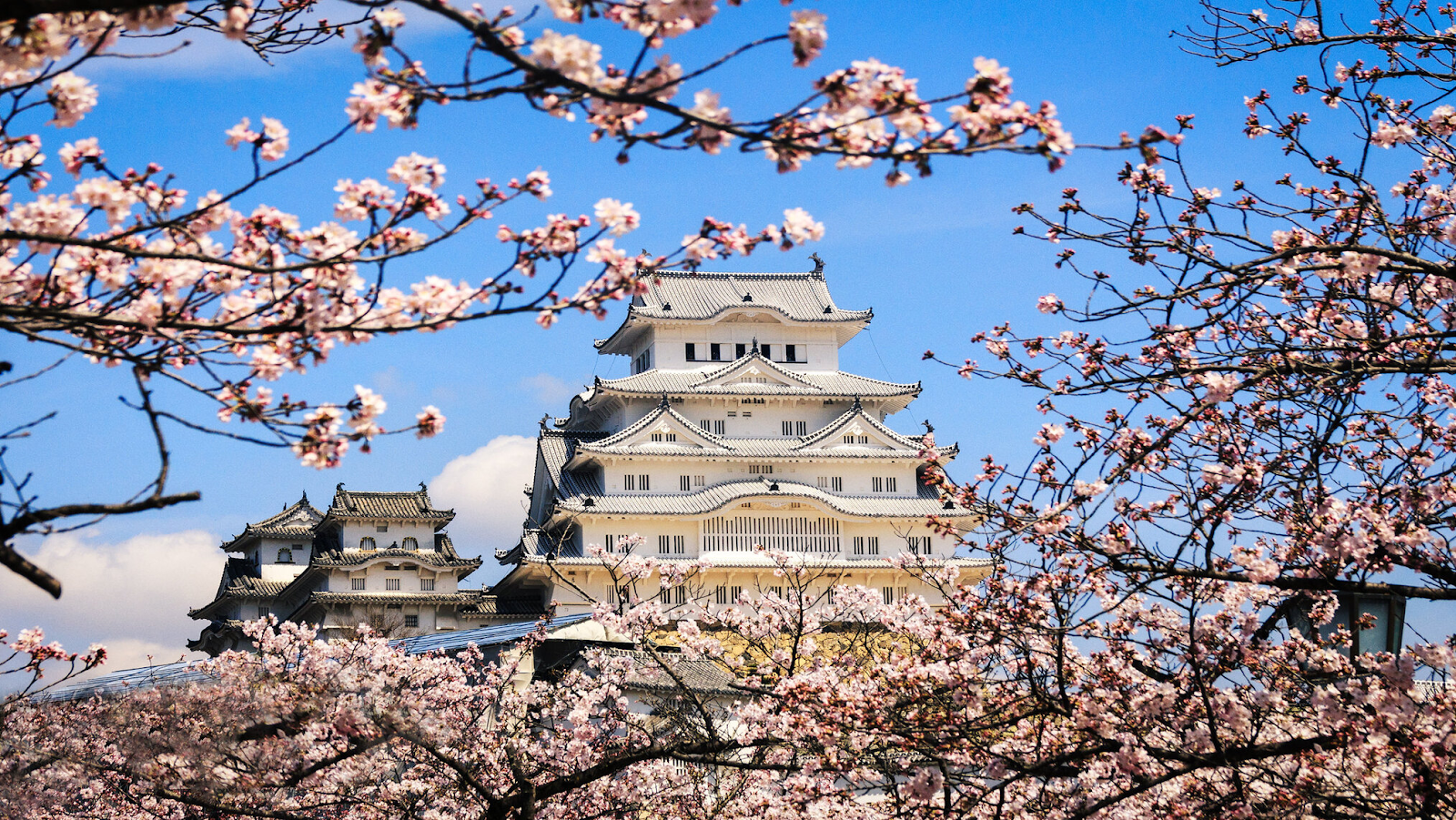
Himeji Castle (姫路城) is one of Japan’s most famous cherry blossom landmarks.
The castle is already striking on its own, but during sakura season, around 1,000 cherry trees bloom around its bright white walls. The result is one of the most recognizable spring scenes in Japan.
The combination of white castle architecture, pink blossoms, blue sky, and reflective moats makes this spot especially photogenic.
- Expected Bloom: Early April
- Duration: 7–10 days
- The Scene: Approximately 1,000 cherry trees on the grounds of Japan's most beautiful castle
- Getting There: From Osaka Station, take the JR Special Rapid to Himeji Station (姫路駅), about 60 minutes and around ¥1,520. From Himeji Station, walk straight north along the main road for about 15 minutes. The castle is visible ahead of you the entire way, which makes it very hard to get lost.
3. Fuji Five Lakes Region (Kawaguchiko)
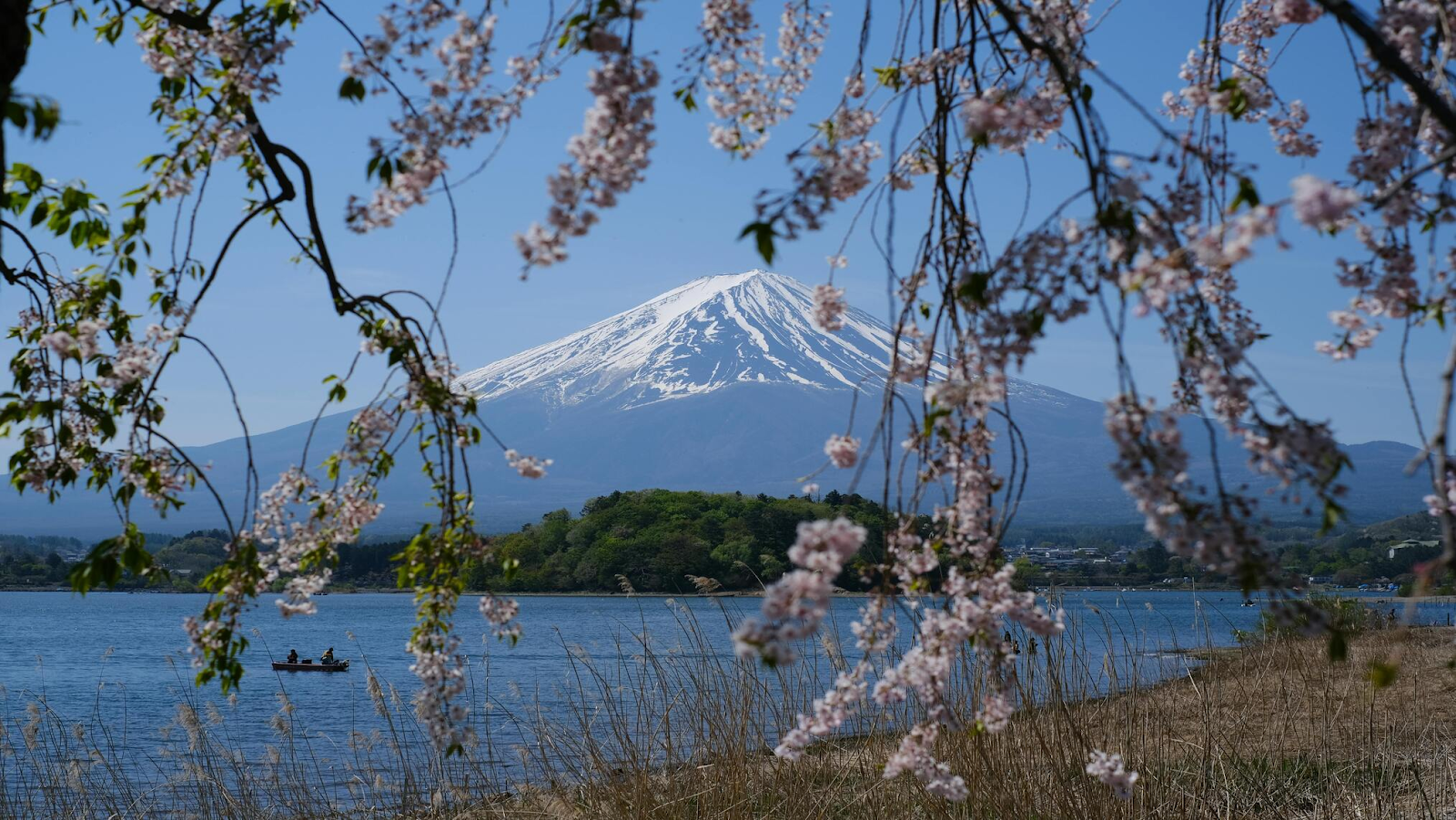
Lake Kawaguchiko (河口湖) is one of the best places to see cherry blossoms with Mt. Fuji in the background.
Cherry trees line parts of the lakeshore, and on clear mornings, you may get the full postcard scene: pink blossoms, lake reflections, and Fuji’s snow-capped peak behind them.
Popular viewing areas include the Ubuyagasaki peninsula and lakeside walking areas near the Kawaguchiko Music Forest.
- Expected Bloom: Mid-April
- Duration: 7–10 days
- The Scene: Cherry trees along the northern shore of Lake Kawaguchiko with Mt. Fuji as backdrop
- Getting There: From Tokyo Shinjuku Station, take the Fuji Express Highway Bus directly to Kawaguchiko Station (河口湖駅). Alternatively, take the JR Chuo Line to Otsuki Station (大月駅) and transfer to the Fujikyu Railway to Kawaguchiko Station. From the station, the lakeshore is about a 10-minute walk north.
Note: The nearby Chureito Pagoda viewpoint (a 15–20-minute walk from Shimo-Yoshida Station) offers a famous view of the pagoda, Mt. Fuji, and cherry blossoms, but this is the former Fujiyoshida festival location. The park remains open with limited services and no crowd management in place.
Cherry Blossom Festival Cultural Etiquette
Do:
- Dispose of trash properly (carry a small bag if bins are full)
- Respect private property near parks
- Keep pathways clear during photos in crowded areas
Don't:
- Shake branches or climb trees for photos
- Block pathways during busy times
- Expect alcohol-free zones (like Shinjuku Gyoen) to allow drinking
Make Your Japan Cherry Blossom Trip Happen
Japan has more cherry blossom magic than any single festival could ever contain. The spots that don't go viral are often the ones that stay with you longest. So, book early, stay flexible, go on a weekday, and show up at opening time.
Beyond that, the only thing left to sort out is staying connected while you're out there.
Airalo’s Japan and Asia eSIMs get you online the moment you land in Japan, with no SIM swapping, no roaming surprises, and no hunting for Wi-Fi. That way, you can check bloom forecasts on the go, navigate subway lines, translate signs, and share photos in real time.
Purchase your Airalo eSIM.
Terms & Conditions apply.
Frequently Asked Questions
Where can I see cherry blossoms other than Japan?
South Korea also has stunning cherry blossoms without Japan's overtourism crisis. Seoul, Busan, Jinhae, and Jeju Island all have spectacular blooms in late March to mid-April, with festivals, fewer crowds, and a welcoming atmosphere.
What is the best city for cherry blossoms in Japan?
Kyoto offers the best combination of cherry blossoms and cultural atmosphere with temples, traditional streets, and the Philosopher's Path. Tokyo has more variety of spots, while smaller cities like Kanazawa offer fewer crowds.
Where are the cherry blossom fields in Japan?
Mt. Yoshino has 30,000 trees covering the mountainside. Hirosaki Castle features 2,500 trees with cherry blossom tunnels. Takato Castle Ruins Park has 1,500 trees, and Expo '70 Park in Osaka has over 5,000 trees across large lawns.
Is Kyoto or Tokyo better for cherry blossoms?
Kyoto wins for atmosphere (temples, traditional settings, fewer neon lights), while Tokyo offers more variety and convenience. Kyoto blooms a few days later than Tokyo, making it possible to see both in one trip if you time it right.