


Avoiding scams in Thailand doesn't mean ruining your trip by constantly staying on edge; you just need to know which red flags to watch out for. A little common sense goes a long way, especially basics like being wary of strangers offering unsolicited advice and knowing when something is too good to be true.
Most schemes, including the Lucky Buddha scam in Bangkok and the miracle cure trick, use psychological traps to gain your trust, whereas others, like unmetered taxi rides, are more opportunistic. Here's your guide to the most common Thailand tourist scams and how to avoid them.
Get your Airalo eSIM. Terms and conditions apply.
What Are the Most Common Tourist Scams in Thailand?

The most common tourist scams in Thailand involve fake temple closures, rigged taxi meters, inflated motorbike rental damage claims, overpriced tourist SIMs, overnight bus theft, and bogus miracle cures — all designed to part you from your money through misdirection or pressure.
The Lucky Buddha Scam in Bangkok
The infamous Lucky Buddha scam is one of Bangkok’s longest-running cons. It usually starts with a “friendly” local politely informing you that the Grand Palace (or another attraction) is closed for the morning due to a Buddhist holiday, religious ceremony, or another similarly convincing excuse.
Fortunately, your new “friend” will offer the perfect solution: the Lucky Buddha tour. They’ll explain that a special temple happens to be open to the public for today only, and then a tuk-tuk driver will not-so-coincidentally pull up and offer to take you there, along with a couple of other temple stops.
Better yet, the tuk-tuk driver can give you an unusually low price, often around 20–60 baht (USD $0.60–USD $1.80) for a few hours, because of a fabricated “government subsidy” to help promote tourism. If you agree, the driver will take you to a modest little temple tucked away in a back alley.
Inside the temple, you’ll sometimes cross paths with an accomplice, who will congratulate you on your lucky timing to visit the temple before mentioning a gem sale that ends today.
As if by chance, your next stop will inevitably be a gem store, where sales staff will attempt to pressure you into making a high-value purchase for low-quality products. The entire “tour” is geared towards getting you into this shop, and everyone involved makes a commission on any sale.
In some cases, you’ll also be taken to a tailor shop. If you refuse to buy anything in either store, your driver might even get angry and demand a higher fee for the tour.
How To Avoid the Lucky Buddha Scam
To avoid being caught out by the Lucky Buddha scam in Bangkok, check opening times for major attractions before you arrive and be wary of tuk-tuk drivers offering unbelievably low prices. The Grand Palace rarely closes to the public for the day, so check on Google or a reliable Thailand travel guide if a stranger is telling you otherwise.
And, if you do find that you’ve fallen victim to the Lucky Buddha scam, don’t be convinced into buying anything by the pushy salespeople and report it to the Tourist Police.
Broken Taxi Meter
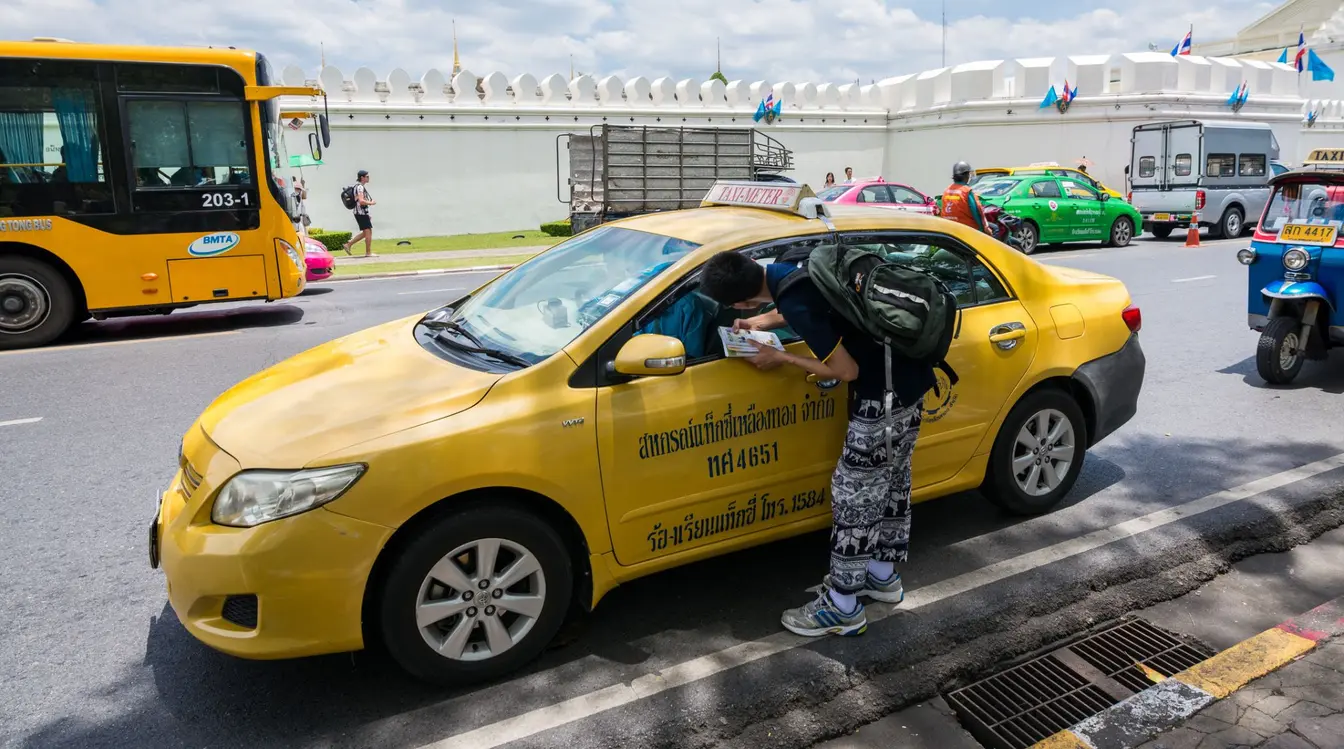
The Broken Taxi Meter scam is simple; a driver will claim their meter isn't working, and then insist on negotiating a fixed fee for your journey. They’ll typically try to charge three to five times what the trip should cost and will refuse to take you until you agree.
This scam is particularly common near Bangkok’s tourist hotspots, such as the Grand Palace and Khaosan Road, but taxi drivers overcharging unsuspecting tourists isn’t limited to just the capital city.
Some drivers use a slightly different approach: they run a rigged meter that increases the fare much faster than a regular taxi meter. This trick is harder to spot, so it’s often easier to skip regular taxis in favor of ride-hailing apps.
How To Avoid the Broken Taxi Meter Scam
The easiest way to avoid the broken taxi meter scam is to use ride-hailing apps like Grab, LINE MAN, and Bolt instead of metered taxis. These apps show you the exact fare before you book and help you avoid inflated prices that street-side drivers try to negotiate.
If taking a metered taxi is unavoidable, insist on using the meter before you get in. If that doesn't work, use ride-hailing apps as a benchmark for what the trip should actually cost.
Most ride-hailing apps accept foreign bank cards. Using a card with no foreign transaction fees lets you save your cash, helping you to avoid the pricey ATM withdrawal fees.
Thailand Scooter and Motorbike Rental Damage Scam

Motorbike and scooter rental operators run one of the most common scams in Thailand, where they attempt to force you into paying extortionate fees for vehicle damage that you didn't even cause. Fortunately, there are plenty of trustworthy operators too, but here's how the scam works.
When you rent a bike or scooter in Thailand, many operators will ask to hold your passport as a deposit, which is normally a big red flag. Then, when you go to return the vehicle, the shop will claim you’ve damaged it, pointing out scratches and dents that were almost certainly there when you picked it up.
If the shop has your passport as a deposit, they have the leverage to drastically overcharge you for minor cosmetic damage that they have no intention of repairing — so they can pull the same trick on the next unlucky tourist.
Some variations of this scam exist, with jet ski operators running similar schemes to trick tourists out of their money. In these instances, the operator and several of their friends will try to intimidate you and block you from leaving the beach unless you pay for damage that was already there. Even if the damage didn’t appear to be there originally, it may have been covered with soluble paint.
To legally ride a scooter or motorbike in Thailand, you must hold a valid motorcycle license along with an International Driving Permit. Driving without one may invalidate your travel insurance in case of an accident.
How To Avoid the Rental Damage Scam
To avoid rental damage scams in Thailand, check the operator's Google Reviews to gauge their reliability. Sort by the lowest ratings to check if previous customers have had any major issues, and be wary of shops with no reviews or only a handful.
Whatever you do, never leave your passport as a deposit for any rental. If the operator isn’t happy taking a photocopy along with a cash deposit, it’s not worth the risk.
To be extra safe, it’s worth taking photos of the vehicle’s condition before you drive it out of the shop. That way, if the operator claims that you’ve caused damage, you can prove whether it was a pre-existing issue.
Tourist SIM Cards and Roaming Charges
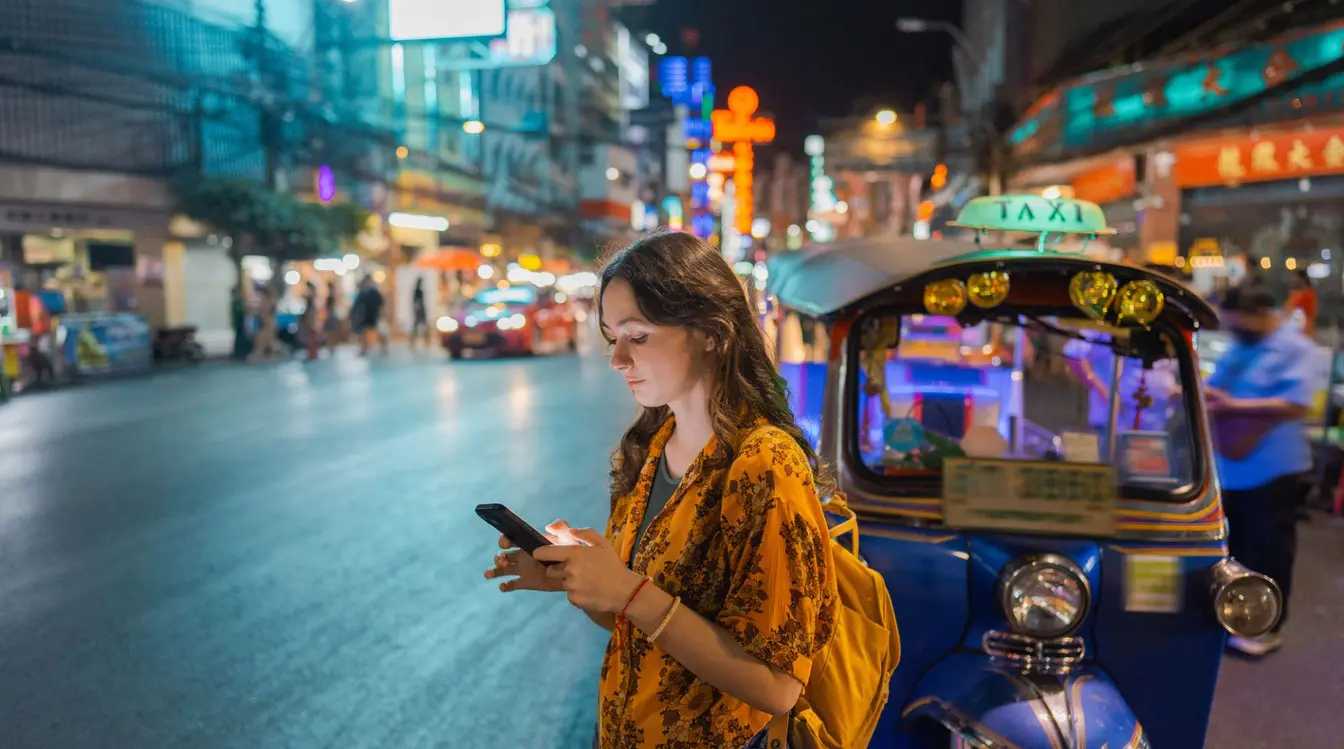
Tourist SIM cards and international roaming packages aren't scams in the traditional sense, but both options almost always cost you more than they should.
Before you've even had a chance to leave any major international airport in Thailand, you'll find a collection of kiosks and stalls selling “specialized” tourist SIMs. This might seem convenient at first, but if you compare the cost to local SIM cards sold in the city, the price difference is staggering.
Roaming on your home network is usually costly, too, unless it’s included in your standard allowance. Most networks offer roaming packages, but even they tend to cost much more than an eSIM or local SIM card. And if you roam freely without a package, you’ll pay even more for the privilege.
How To Avoid Tourist SIM Cards and Roaming Charges in Thailand
The best way to avoid overpriced tourist SIMs and roaming charges in Thailand is to install an eSIM before you arrive. Beyond the savings, a Thailand eSIM means you can avoid standing in line for a physical SIM card on arrival, get online the second you land, and can keep your home number active for important texts like OTPs.
Find the right option for your trip with our guide to the best eSIMs for Thailand.
Overnight Backpacker Bus Theft
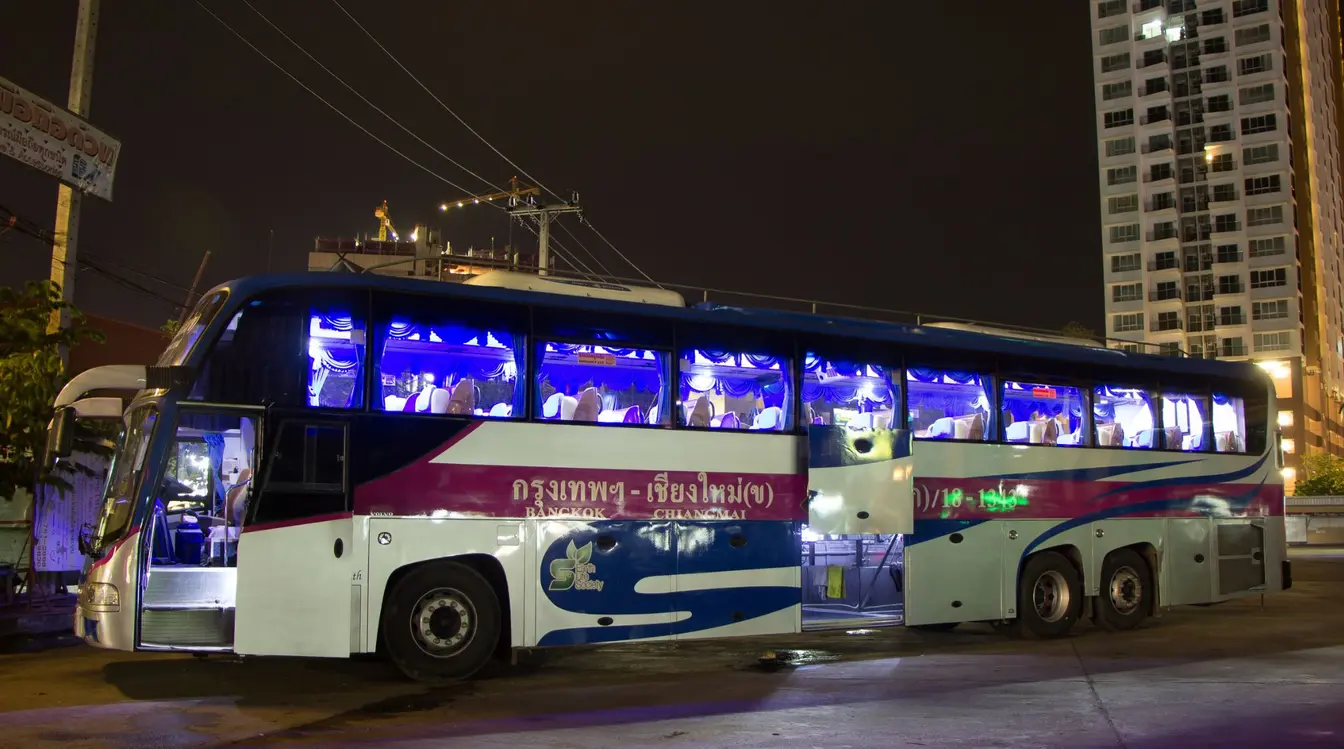
One of the most infamous Thailand tourist scams primarily targets budget travelers on long-distance overnight buses, with thieves stealing valuables from the luggage compartment during the journey.
Sleeper buses are a rite of passage for backpackers in Thailand, offering an affordable way to travel while saving the cost of a night’s accommodation. Travel agencies across the country sell low-cost tickets for overnight journeys, with common routes running from Bangkok to Chiang Mai, Phuket, or Koh Phangan.
In some cases, the ticket prices are so low because operators know they can offset the cheap fares by stealing valuables mid-journey.
The buses' layout means you store your luggage in a separate compartment below the seats, leaving it unattended for the entire journey. Over the course of the journey, an accomplice slips into the luggage compartment to steal passengers' cash and valuables, without leaving any immediately obvious signs of tampering.
By the time you arrive at your destination, the thief has normally been dropped off somewhere along the way, along with any stolen belongings.
How To Avoid the Overnight Backpacker Bus Theft Scam
The only effective way to protect yourself against overnight bus theft in Thailand is to keep all of your valuables — especially cash, high-value electronics, and your passport — in the passenger cabin with you. Only store low-value items that can be easily replaced in the luggage hold, like clothes and toiletries, as thieves are unlikely to bother taking them.
Although this scam has been running for several years, most operators in Thailand are trustworthy and won’t cause you any issues. Still, it’s best to stay vigilant by keeping your valuables with you and checking Google Reviews before buying a ticket.
Miracle Cure Scam
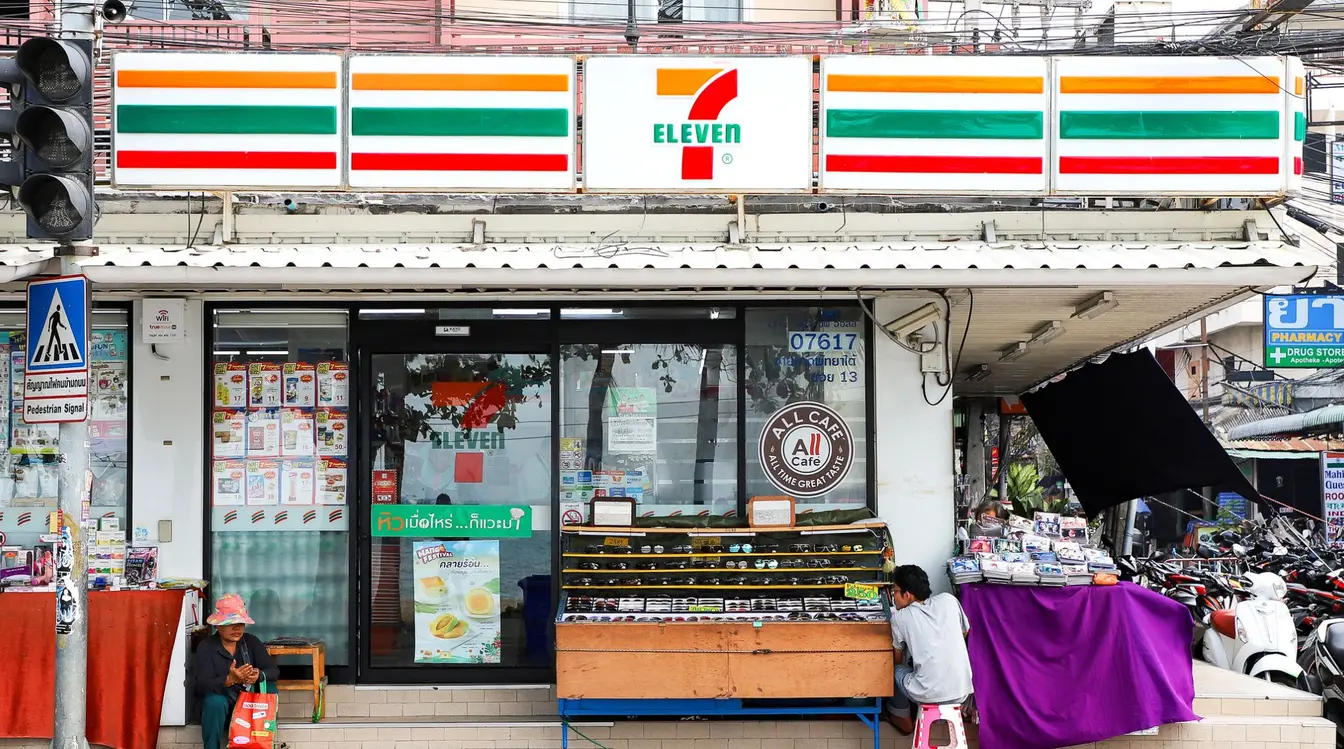
One of the more elaborate Thailand scams involves a multi-stage setup that manipulates you into overpaying for a phony “miracle cure” for hair loss, weight issues, or skin imperfections.
It starts with a friendly stranger, usually pretending to be a fellow tourist, approaching you and striking up a conversation. As you chat, they'll casually mention a physical flaw — often related to your weight, hairline, or skin — and then claim to know an easy cure for it. Then they’ll show you before-and-after pictures of themselves or a family member to “prove” just how well it works.
To build your trust, they’ll tell you the cure is available from 7-Eleven to give you a false sense of security. The scammer will accompany you to the nearest 7-Eleven and point you toward an inexpensive oil or another similar product.
The low price can easily tempt you to give it a try, but once you buy the product, they’ll tell you that you also need another ingredient from a nearby store. By now, you've already invested money into the “cure”, so it's natural to feel like you might as well see it through.
Once you arrive at the second shop, the actual scam starts. The store is in on the hustle and will work alongside the scammer to convince you to buy low-value herbs or other ingredients at inflated prices, under the pretense of a secret remedy.
The miracle cure scam primarily operates in tourist-heavy areas of Bangkok, Pattaya, and Phuket.
How To Avoid the Miracle Cure Scam in Thailand
The only way to avoid the miracle cure scam in Thailand is to simply walk away if a stranger is offering you unsolicited medical advice. Strangers will rarely approach you in the street and strike up a full-on conversation, so be wary of anyone who attempts to do so.
Get your Airalo eSIM. Terms and conditions apply.
Directs to Airalo help center for more support information.