


Heading abroad? Your phone bill shouldn't cost more than your flight. Many US carriers charge around $12 a day for international roaming passes, which adds up to serious bill shock on any trip longer than a few days. Before you go, it's worth comparing the best international plans to see what you'll actually pay for staying connected.
In this guide, we're breaking down exactly what T-Mobile, AT&T, and Verizon international plans cost, and comparing them to using a travel eSIM. Find out how much you can save on a one- or two-week trip, and get step-by-step tips to avoid roaming fees.
In this article:
How US Carrier Roaming Plans Work (And What They Cost)

Americans generally default to their current provider for roaming options. These providers offer convenient options ranging from day passes to International monthly plans. This convenience comes at a fee, with many options costing $12/day, which can quickly add up on a longer trip.
Why Do Americans Use Carrier Roaming?
While roaming fees are a big expense, Americans tend to stick with their carrier when going abroad because it requires no setup. These plans offer convenience, but that ease comes at a cost.
- Full service: The plan typically includes standard services (calls, texts, and data) under your regular phone number.
- Simplicity: Prepping for a trip can be overwhelming, and using your provider's roaming plans can feel easier (if not cheaper) than seeking out other options.
- Customer support: Although phone wait times are never fun, it can be reassuring to know who to call if something goes wrong with your data on your trip.
- Familiarity: Travelers might default to their primary carrier and not know there are alternatives.
How Much Do US Carrier Roaming Plans Cost?
Many US carriers charge a flat fee of around $12 per day for an international roaming pass, regardless of how much data you consume. This lack of flexibility often means you are overpaying, with roaming fees quickly adding up to $168 over a two-week trip — money better spent on souvenirs or rideshares to the airport.
What's an eSIM and Why Should Americans Care?

eSIMs eliminate the need to swap physical SIM cards when traveling.
An eSIM is a digital SIM card built directly in your phone — no physical SIM, Nano, or Micro SIM card to swap or leave in your other jacket. For American travelers, this means prepaid data plans starting under $6 that replace more expensive carrier roaming fees, with no surprise charges and instant connectivity when you land.
Why an eSIM Is a Game Changer for Travel
If you're looking for more flexibility and cheaper data plans, travel eSIMs are a fantastic option.
- Clear expectations: Surprise roaming fees are never fun. eSIMs are prepaid, meaning you can choose the exact amount of data and duration you need (e.g., 5GB for seven days) and pay for it upfront.
- Flexibility: Choose from local, regional, or global eSIMs, purchase a regular or unlimited package, and top up as needed.
- Quick connection: Purchase and install your data before you head out. It will connect automatically when you arrive at your destination, so you'll spend less time scrambling at the airport.
- Smart budgeting: The biggest win of all? eSIMs help you save money on your trip. Keep on reading to find out exactly how much.
Note: Do you need your primary line to receive calls and texts? Don’t worry, you can keep your primary number active for calls and texts, and use your travel eSIM for your data needs.
Cost Comparison: US Carriers vs eSIMs
Airalo's prepaid eSIMs are much more affordable than the popular T-Mobile international roaming plan, AT&T international roaming plan, and Verizon international roaming plan. Pick between 200+ destinations worldwide, choose the amount of data you need, and enjoy your trip with more money back in your pocket.
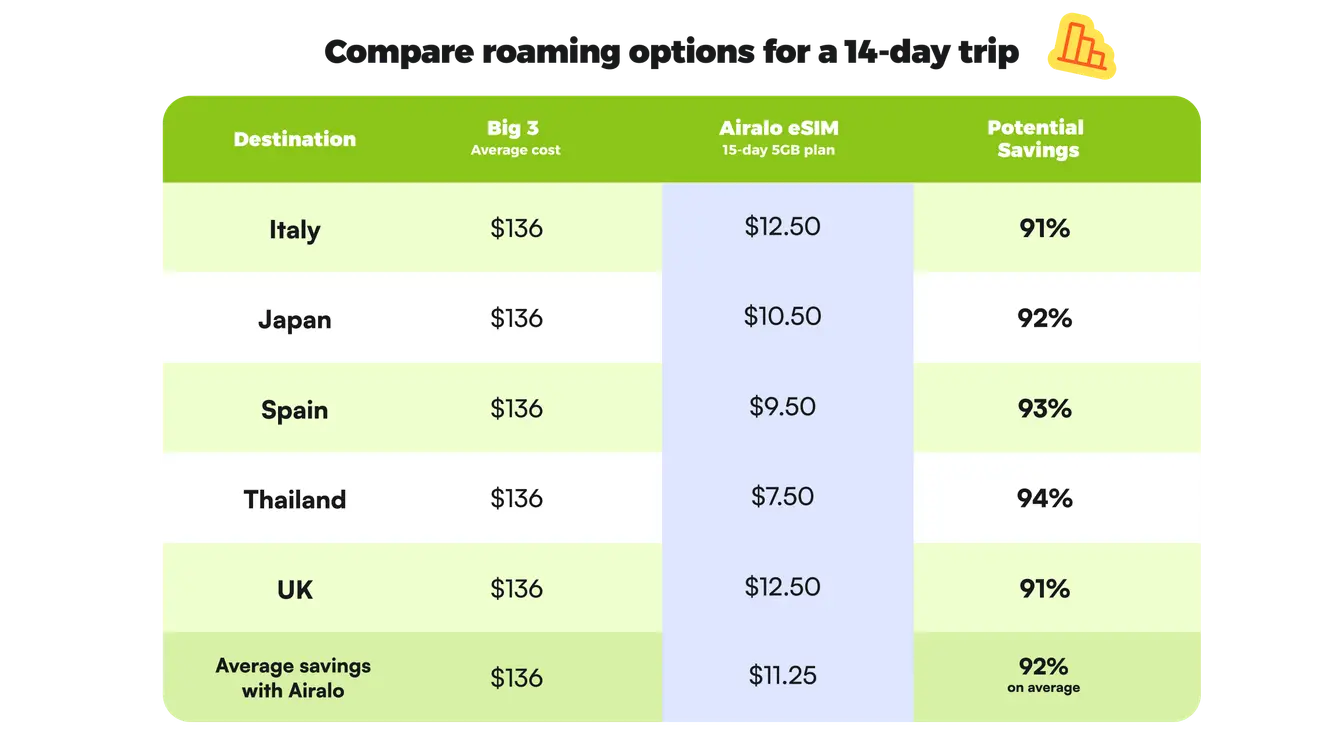
The data is clear — here's how Airalo's eSIM costs compare to US providers for 7-day and 14-day trips:
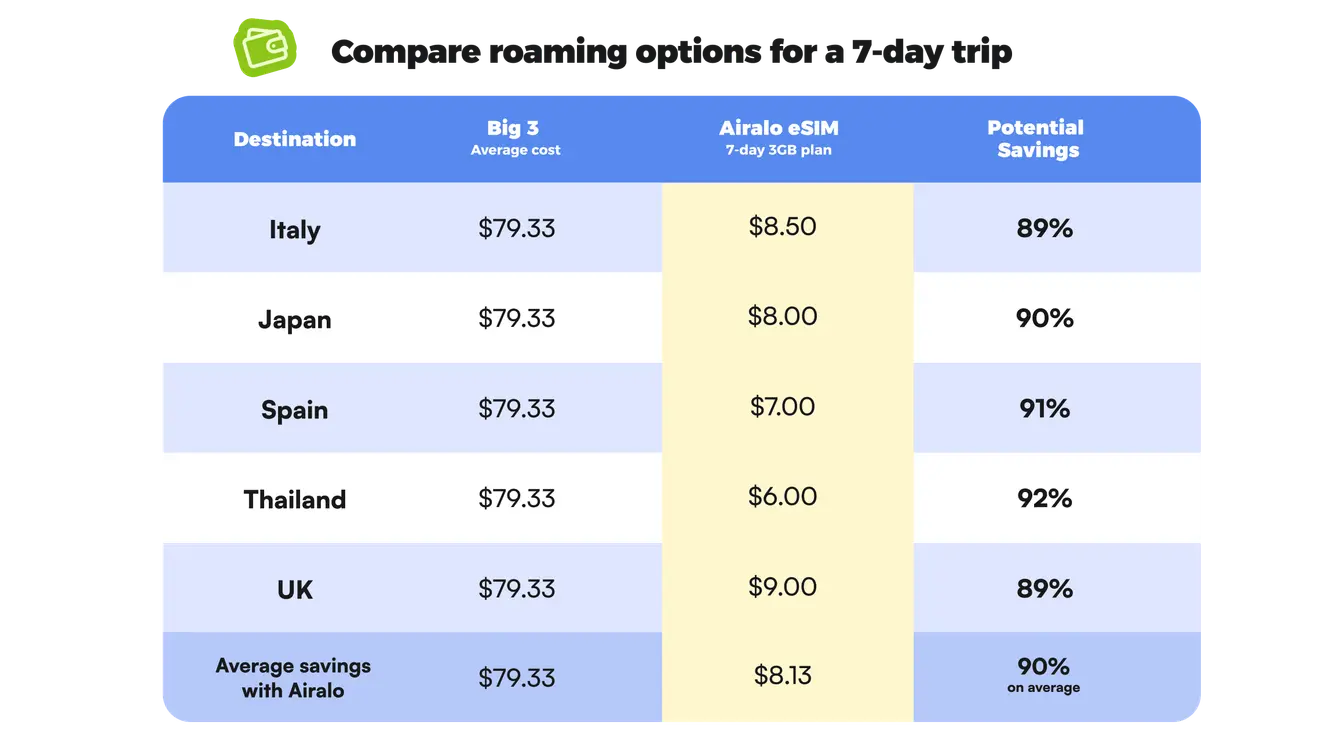
Airalo's 3GB, 7-day eSIM averages USD $8.13. That's up to 90% less than what T-Mobile, AT&T, and Verizon charge for the same trip.
Note: Airalo prices featured in the tables are for data-only, and calls and texts on the primary SIM may still attract roaming charges.
The longer your trip, the more the savings stack up: Using an Airalo eSIM for a 14-day trip averages USD $11.25 for 5GB versus USD $136 with the big three US carriers.
Across both trip lengths and all five destinations, Airalo eSIMs can help you save on roaming fees.
Want to see which eSIMs American travelers are using the most? Here are the top trending eSIMs.
Tips on How to Stay Connected Abroad

No matter the roaming solution you pick, there are a few tips to keep in mind for better connectivity and budgeting.
If You Stick to Your Provider:
- Ask questions: Contact your carrier before your trip to make sure you understand your roaming options. Ask them about the daily cost to expect and set a budget aside for it.
- Toggle off data roaming: Go to your settings and turn it off to reduce roaming costs.
- Use airplane mode: To avoid all roaming charges, stay in airplane mode and use the best Wi-Fi calling apps instead. Note that this will limit your ability to stay connected on the go.
If You Use a Travel eSIM:
- Check device compatibility: Ensure your phone supports eSIM technology and is carrier-unlocked. Most devices released in the last few years are eSIM compatible, but review our complete list of compatible devices to be safe.
- Install your eSIM at home: Install your eSIM while you have a reliable Wi-Fi connection, to limit any interruptions. Most installations will take less than three minutes, and your eSIM will connect to a supported network once you arrive at your destination. For more guidance, visit our help center.
Note: Most eSIMs' validity period starts when you connect at your destination, but in rare cases, it may begin at the time of installation. Check your eSIM's validity policy by selecting Package details before or after purchase.
- Turn off data roaming only: Toggle off data roaming on your primary SIM and keep it active on your travel eSIM instead. This will reduce charges, but you can still be charged for texts, calls, and voicemail.
- Deactivate your primary SIM: For extra peace of mind, you can turn off your primary SIM line entirely. We go over how to avoid roaming charges in our guide.
Picking the best plan for international roaming depends on what you value, but if saving money and flexibility matter to you, travel eSIMs are a top choice.
Ready to stay connected for less? Install the Airalo app, download your eSIM, and activate it. Our guide to installing and activating an Airalo eSIM has easy-to-follow steps, so you never have to worry about surprise bills ever again.
Save on your first Airalo eSIM. Terms & Conditions apply.
Directs to Airalo help center for more support information.
Airalo is not affiliated with, endorsed by, or sponsored by T-Mobile, AT&T, Verizon, or any other carrier mentioned in this article. All product names and trademarks are the property of their respective owners and are used for comparison purposes only. Pricing data is based on publicly available information as at the date of publication and is subject to change. Readers should verify current rates directly with carriers before making purchasing decisions.